Related Articles
Winter Moths
18th December 2025
Day-flying Moths
29th March 2026
Migrant Moths
29th April 2026
Moth Trapping for Beginners
31st May 2026
Festival of Change
29th June 2026
How does a moth hover?
29th June 2026
Moth Mornings
29th June 2026
Moth Trapping for Beginners: Tips
29th June 2026
Identifying Moths for Beginners
23rd July 2026
Revealing Romanian Moths
28th August 2026
Moth Migration 2026
29th September 2026
Out-of area: North Wales
29th September 2026
The Black Witch
With Halloween fast approaching, Mike Southall thought it might be appropriate to write about the Black Witch moth (Ascalapha odorata).
There are five European records: Britain 1899, Denmark 1931, France 1978, and Spain 2007 and 2008. The British record is of an individual found in the orchid pit at Kew Gardens, suggesting it was imported with plant material, and therefore it is on the British Appendix A adventive list. The other European records could well be genuine transatlantic crossings, and it has also been recorded in Africa.
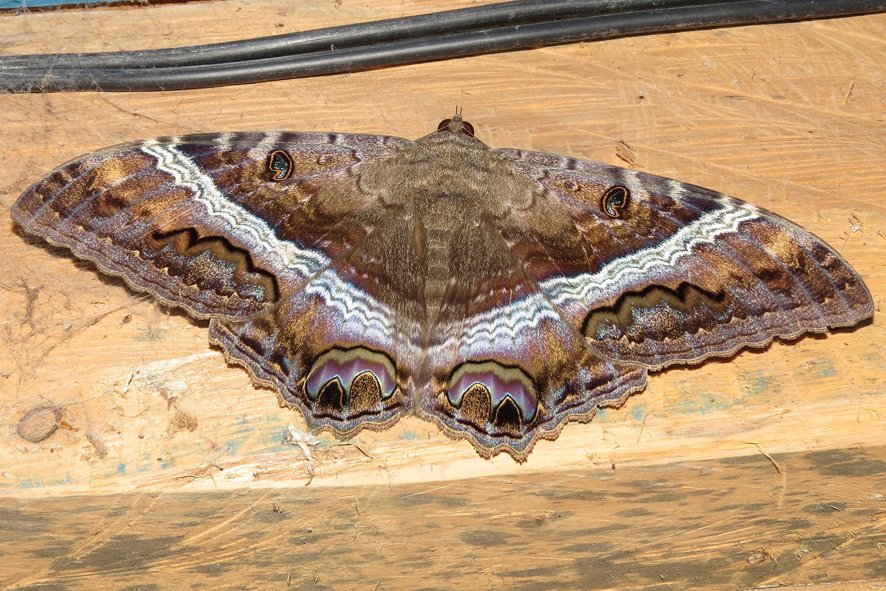 Female Black Witch moth
I've been fortunate to encounter the moth on two separate trips to South America. The first on 18 November 2019 was high in the East Bolivian Andes, where a female was resting on a beam inside my small toilet cabin. I recall getting quite a shock to find this huge moth unexpectedly. The females have a white bar across the wings, which the males lack. The second on 13 November 2024 was a male attracted to actinic light on a trip to the East Peruvian Andes.
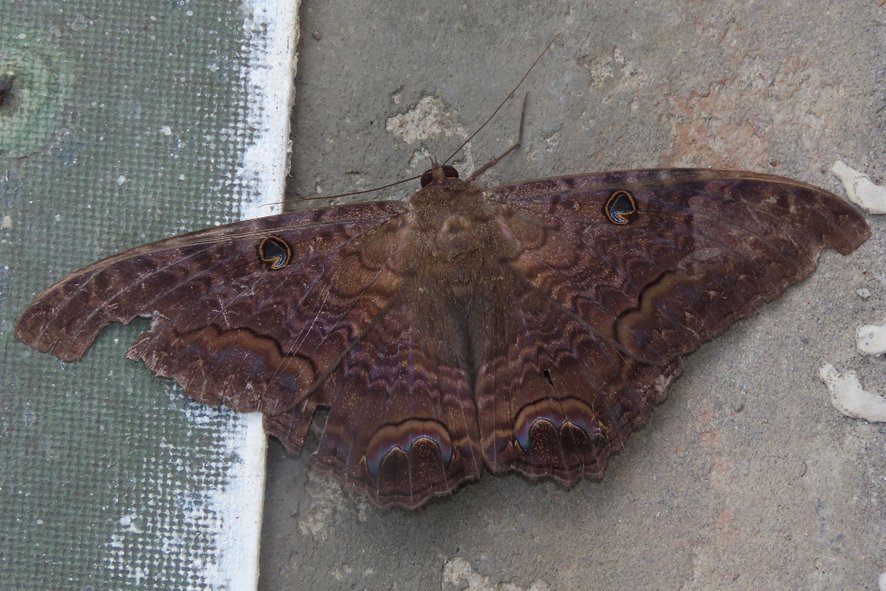 Male Black Witch moth
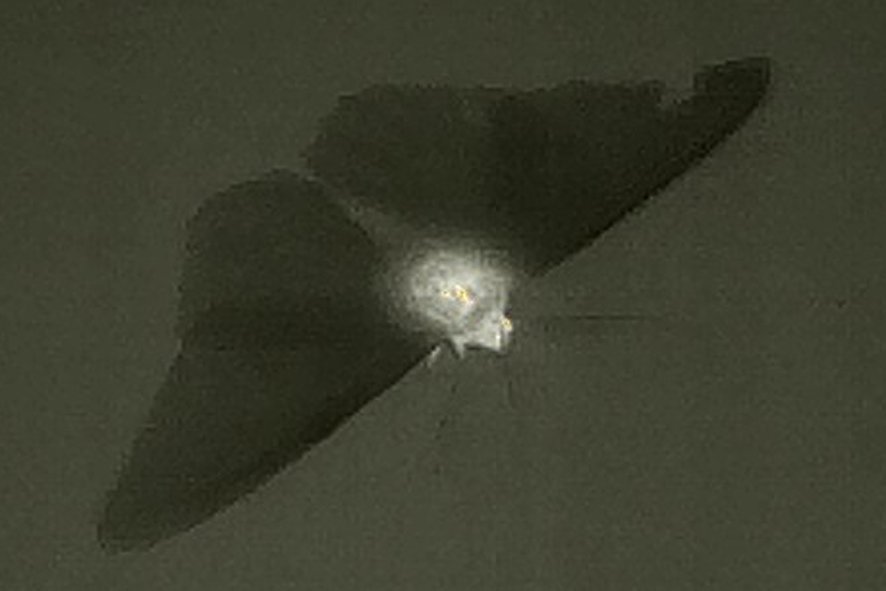 A thermal image of the male shows the heat inside its thorax
Superstitions surrounding this species vary from culture to culture. In Mexican and Caribbean folklore, it's considered a harbinger of death, baldness and blindness. If there's sickness in the house and the moth enters, the sick person will die. In Texas, the moth must visit all four corners of the room for death to occur. In Jamaica, they're called 'duppy bats' meaning bad spirits or flying ghosts. In the Bahamas, they're known as 'money bats' – if they land on you, you'll come into money. Similarly, in South Texas, if a Black Witch lands on your door and stays a while you will supposedly win the lottery. In Hawaii, if a loved one has just died and this moth appears, it's thought to be the embodiment of the soul returning to say goodbye.
In popular culture, it was Black Witch pupae that were placed in the mouths of victims of the serial killer 'Buffalo Bill' in the novel The Silence of the Lambs. In the movie adaption, they were replaced by Death’s-head Hawk-moth pupae.
The genus to which this species belongs is named after a figure from Greek mythology. Ascalaphus, son of the stygian river god, Acheron, and the nymph, Orphne, was the custodian of Hades' orchard in the Underworld.
Whatever the myths, it is a stunning species.
Sources:
- Moths of Great Britain and Ireland by Sean Clancy
- Wikipedia
Note: Back in 2019, Andrew Cooper picked Ten Magical Moths for Halloween for Butterfly Conservation.