Related Articles
Winter Moths
18th December 2025
Migrant Moths
29th April 2026
Moth Trapping for Beginners
31st May 2026
Festival of Change
29th June 2026
How does a moth hover?
29th June 2026
Moth Mornings
29th June 2026
Moth Trapping for Beginners: Tips
29th June 2026
Identifying Moths for Beginners
23rd July 2026
Revealing Romanian Moths
28th August 2026
Moth Migration 2026
29th September 2026
Out-of area: North Wales
29th September 2026
The Black Witch
27th October 2026
Day-flying Moths
Mike Southall introduces some of the species you're likely to see during the day
It's no coincidence that many of our day-flying moths are also our most colourful insects. They have evolved to warn potential predators either that they are unpalatable or that they may be aggressive, or both. Many of the Erebidae and Zygaenidae are good examples of this, with Tigers and Burnets the standout families.
Our regional online moth atlas shows many of the moths likely to be seen during the day, either because they are day-flying by nature or because they are easily disturbed. The Day-flying moths option in the Finder section shows two sets of photographs: 73 macro species and 96 micro species. Clicking on a name opens the species page with the regional records. Although not comprehensive, it's a good place to start to discover some of our day-flyers.
The Sesiidae or Clearwings have evolved to imitate diurnal wasps. I've already discussed this group in a previous article about pheromone lures and these can also attract other species of day-flying moths, both macro and micro, some of which are thus being found to occur more widely than previously thought.
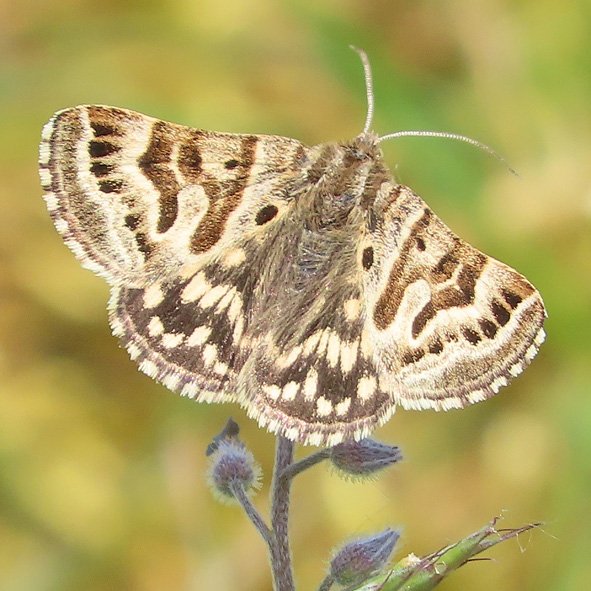 Moth Shipton
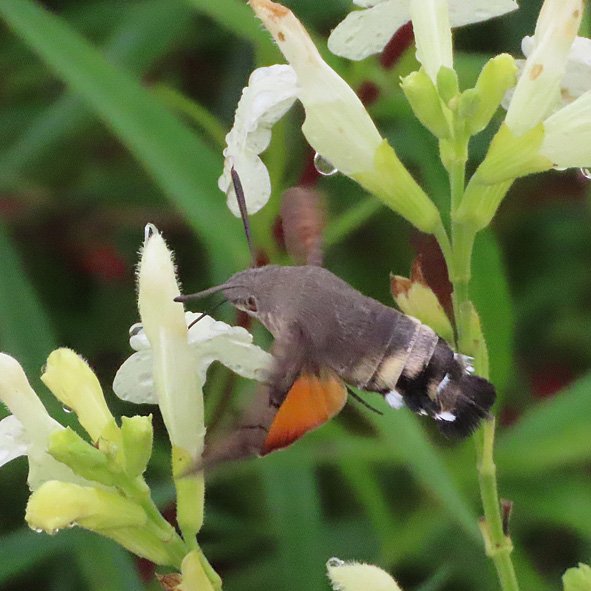 Hummingbird Hawk-moth
Other day-flyers are only likely to be reliably seen in their specific habitats, such as heathland, ancient woodland or traditional hay meadows, but can be surprisingly common when conditions suit. Species that come to mind include Mother Shipton, Burnet Companion, Common Heath and Speckled Yellow. Spotting rarities, such as the Narrow-bordered Bee Hawk-moth, requires more planning with regard to location, timing and weather conditions, often with some luck thrown in.
Even habitat specialists can occasionally wander and add to a garden list. I was fortunate to record both Six-spot and Narrow-bordered Five-spot Burnet in my garden last summer, the latter coming to a Clearwing lure. The hot summer produced several sightings of Hummingbird Hawk-moth on my garden flowers, with two together on one memorable day.
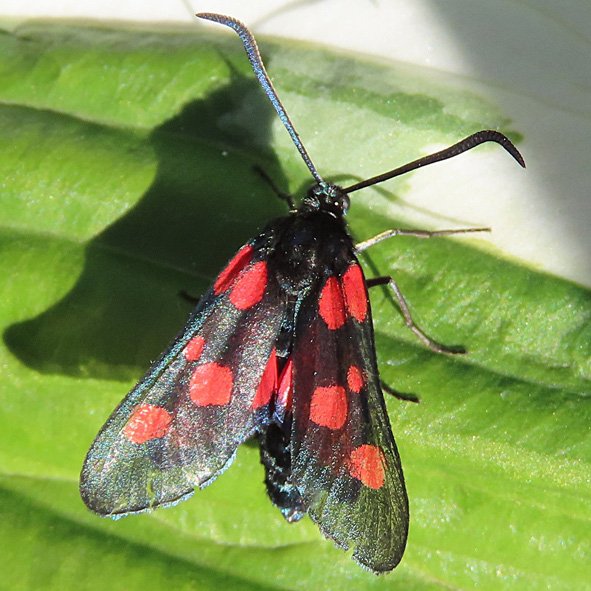 Narrow-bordered Five-spot Burnet
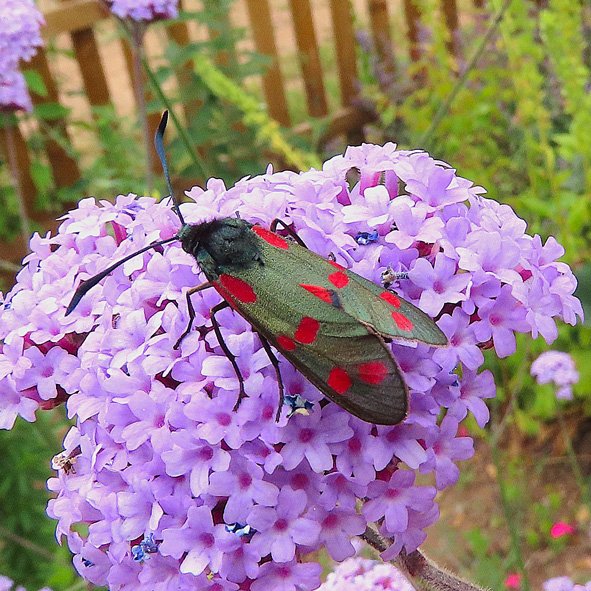 Six-spot Burnet
Silver Y moths are usually often-seen day-flyers, although this depends on how many have migrated from the continent and bred. The colourful Mint Moth (Pyrausta aurata) is also a regular visitor to my herb patch, with Nettle-tap and Mother of Pearl attracted to weedier garden areas. Hedge Beauty (Alabonia geoffrella), commonly known as Geoffrey, is a stunning little micro moth which flies in May and June. A favourite of mine, I find them flitting about on my local farm hedges.
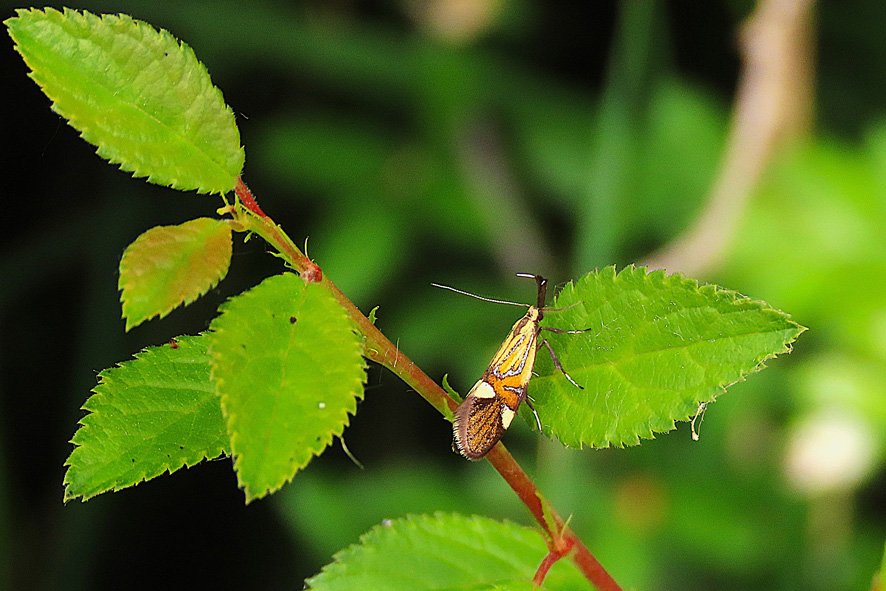 'Geoffrey'
Butterfly Conservation has a brief guide to day-flying moths.