Related Articles
Winter Moths
18th December 2025
Day-flying Moths
29th March 2026
Migrant Moths
29th April 2026
Moth Trapping for Beginners
31st May 2026
Festival of Change
29th June 2026
How does a moth hover?
29th June 2026
Moth Mornings
29th June 2026
Moth Trapping for Beginners: Tips
29th June 2026
Identifying Moths for Beginners
23rd July 2026
Revealing Romanian Moths
28th August 2026
Moth Migration 2026
29th September 2026
The Black Witch
26th October 2026
Out-of area: North Wales
Mike Southall took his moth traps on holiday back in July and shares some distinctive catches.
The tenth of July this year saw my wife Wendy and me set off from Worcestershire to North Wales for a short break. We stayed in a house in Dwygyfylchi, a small and virtually unpronounceable coastal village near Conwy. I ran two moth traps in the back garden for all seven nights of our stay, a 125W mercury vapour Robinson and a 40W actinic. I recorded 69 species on the first night, and 126 species in total. New species ranged from fourteen to five a night, with an average of nearly ten.
Species seen
Many were common and familiar, species I would see at home, but there were more heather-feeders, given the proximity of the nearby hills. These included True Lover’s Knot, Broom Moth, Narrow-winged Pug, Pempelia palumbella and Neofaculta ericetella. A highlight for me was the arrival on the first night of an Ashworth’s Rustic, a species whose UK range is confined to north-west Wales. It was my target species for the trip and I had not seen it before, although one was recorded in Shropshire in 2024 – the only West Midlands record. Oak Eggar, Garden Tiger, Swallow-tailed moth, Grass Emerald, Crescent Dart and Magpie moth were also good to see.
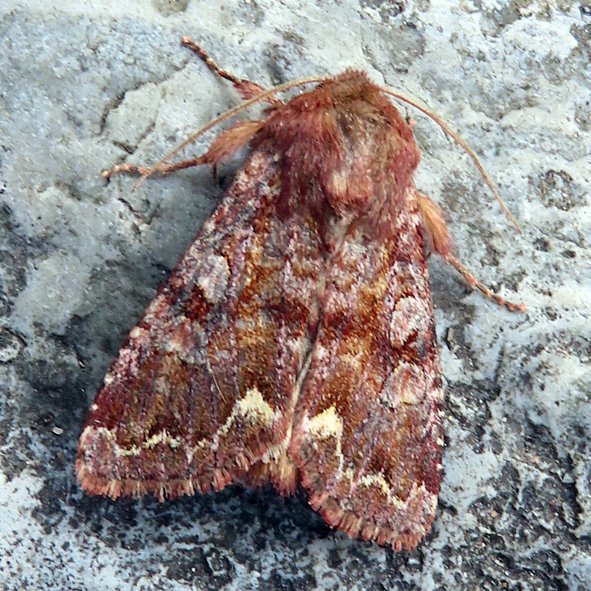 Broom Moth
 Pempelia palumbella
 Ashworth's Rustic
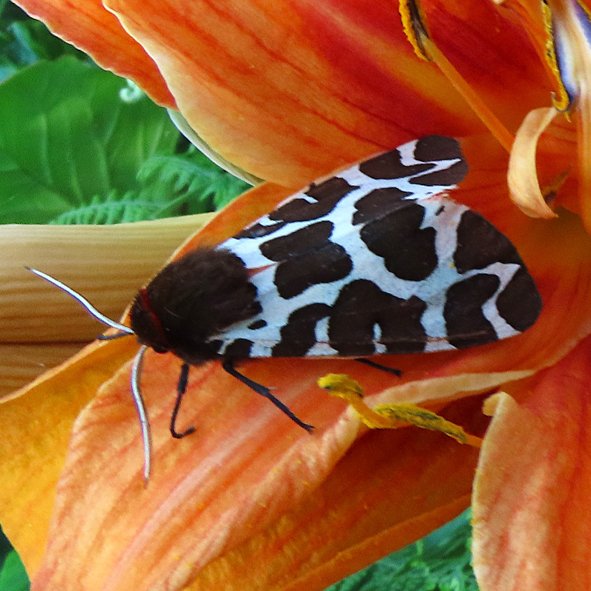 Garden Tiger
Habitat under threat
After checking the traps and going back to bed, I was alarmed on our second morning to be woken by a policeman banging on the door and telling us to keep our windows shut to keep out the smoke. A large fire had taken hold at Sychnant Pass (Bwlch Sychnant) on the hill just inland from us. The fire was declared a major incident and 36 houses were evacuated at Capelulo, the closest village.
Thankfully, due to the firefighters' hard work, no lives were lost or houses destroyed but 230 acres of hillside was burnt. The fire was said to be so intense that even the ground caught fire. A local farmer commented that at least the ticks would have been killed off but that the heather would take many years to recover. I thought about the Ashworth’s Rustics and their restricted habitat being lost, and I did not record another after the fire. The dry conditions were extremely hazardous: a few days later we had to call the fire service when we saw a hedge fire spreading on a housing estate at Conwy.
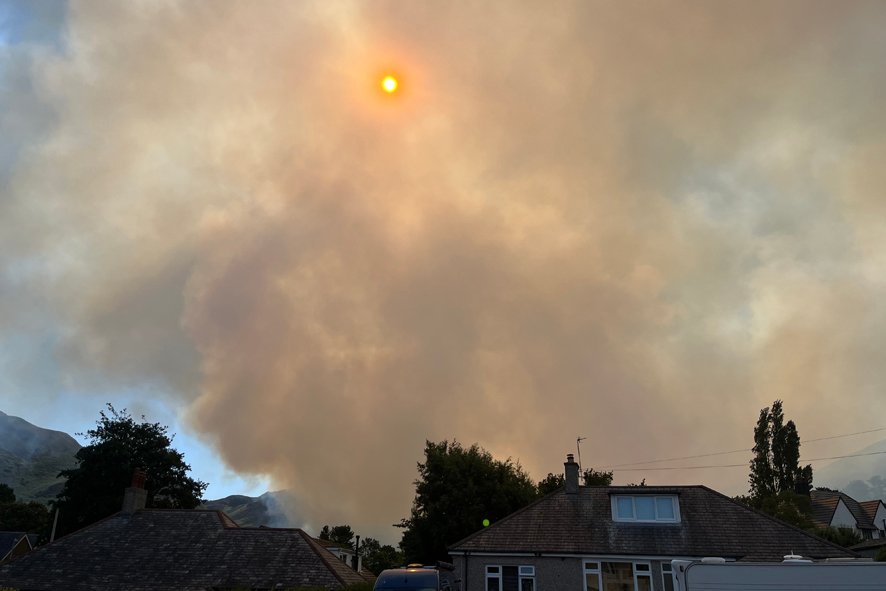 Thick smoke almost obscuring the sun at the height of the fire
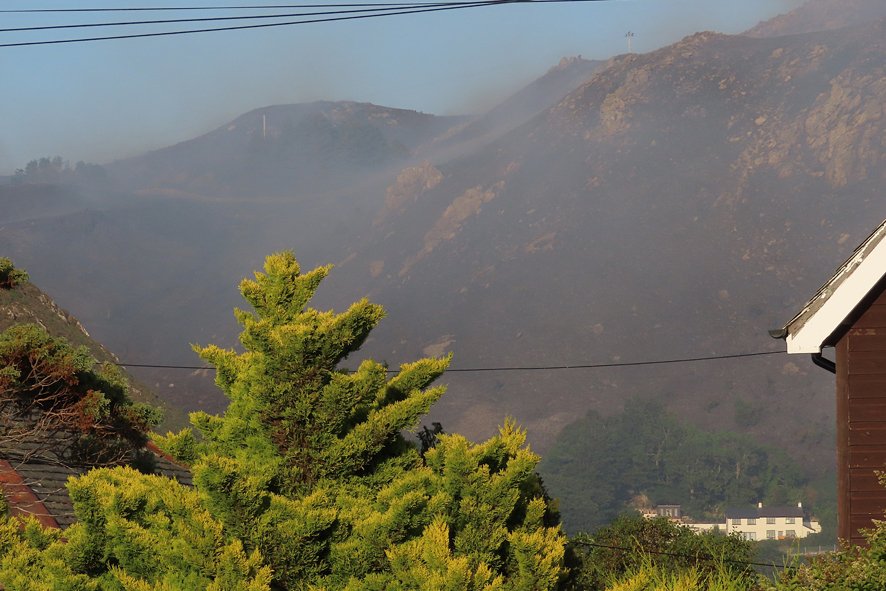 Burnt and blackened hillside smouldering afterwards
Other wildlife highlights
Dwygyfylchi is close to the North Wales expressway, with good access to Anglesey, Conwy, Llandudno and the Great Orme. This gave us the opportunity to see various other wildlife and tourist attractions during our short stay.
An enjoyable visit to the National Trust property Plas Newydd on Anglesey yielded White-letter Hairstreak and Red Squirrel. On a very pleasant boat trip from Beaumaris to Puffin Island, we saw a range of seabirds including Puffins, Guillemots, Razorbills and Manx Shearwaters. I took a pheromone lure to the Anglesey coast around noon, found some thrift, and connected with Thrift Clearwing for the first time. Highlight of a trip to the Great Orme near Llandudno was photographing an adult and juvenile Chough on the baked brown grassland. The RSPB's Conwy Nature Reserve held a large flock of Curlew, among other waders, and we visited the well-preserved Conwy Castle.
All in all, a very memorable short holiday.
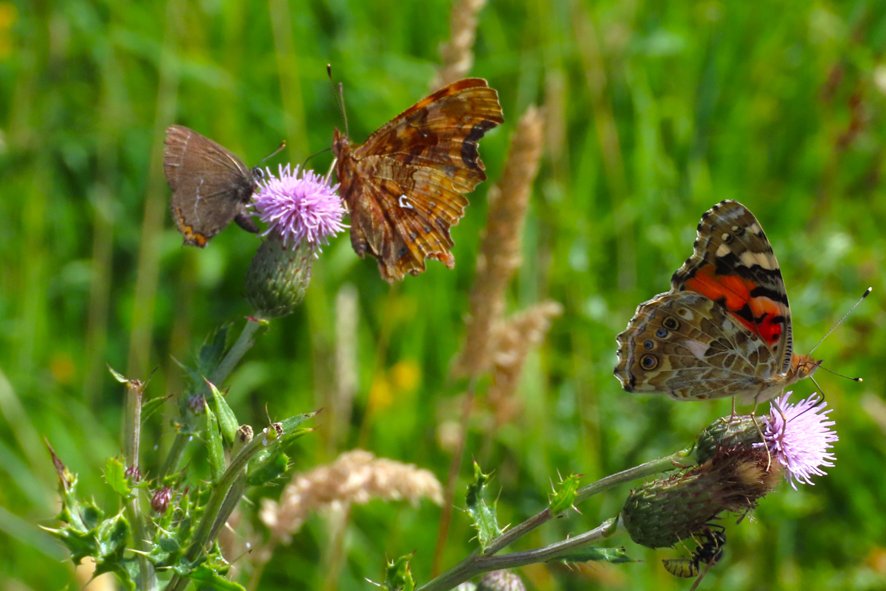 White-letter Hairstreak with Comma and Painted Lady
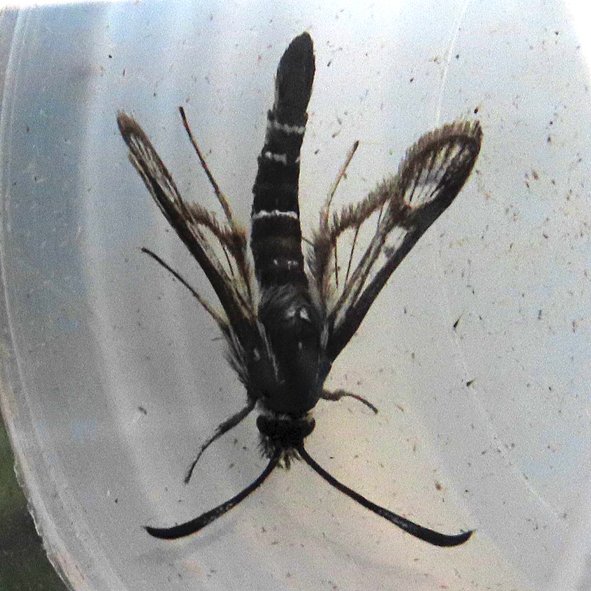 Thrift Clearwing
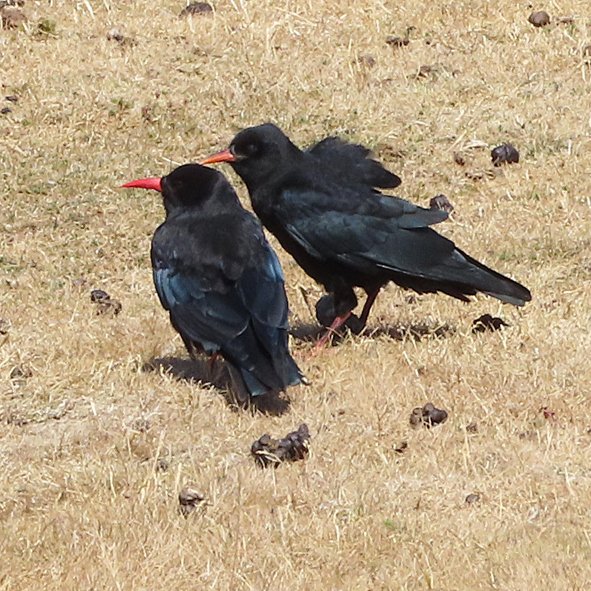 Choughs
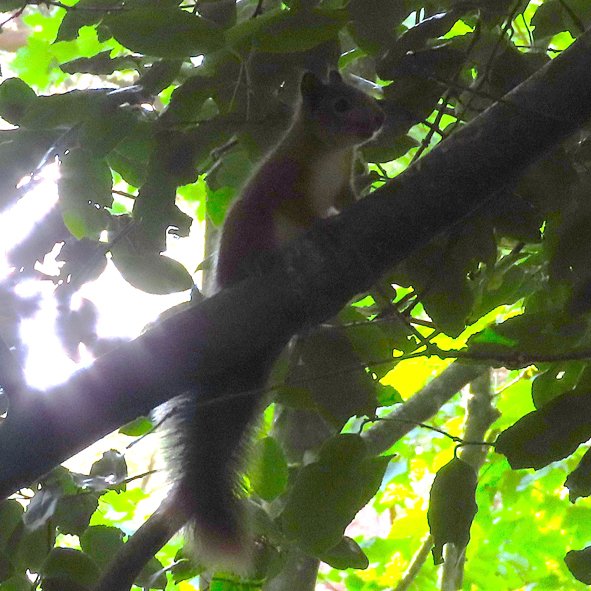 Red squirrel
 Puffin