Related Articles
The rise and rise of the Brown Hairstreak butterfly
18th December 2025
My Volunteering Story - Jenny Joy
31st January 2026
My Volunteering Story - George Davis
18th December 2025
My Volunteering Story - Marian Newell
27th February 2026
ID Guide: Fritillaries
29th March 2026
My Volunteering Story - Mike Williams
29th March 2026
My Volunteering Story - Trevor Bucknall
29th April 2026
My Volunteering Story - David Shearan
31st May 2026
My Volunteering Story – Simon Primrose
29th September 2026
My Volunteering Story - Gary Booth
One of our relatively new volunteers explains why the Wyre Forest is special to him and how he has become more involved with this site since semi-retirement.
Two years ago, I transitioned into semi-retirement. In planning what to do with my additional free time, I considered the things that were important to me in terms of my time and interests. ‘Giving back’ to, and spending more time in, the Wyre Forest was high on my list of priorities. I was aware of several conservation groups working in the forest, including Butterfly Conservation which was working in partnership with Forestry England to support the Pearl-bordered Fritillary's survival.
I contacted Mike Williams, the work party organiser, who provided a great overview of the work undertaken to support Pearl-bordered Fritillaries, including ride management and scrub clearance. He invited me to volunteer in what was my first work party in Autumn 2024.
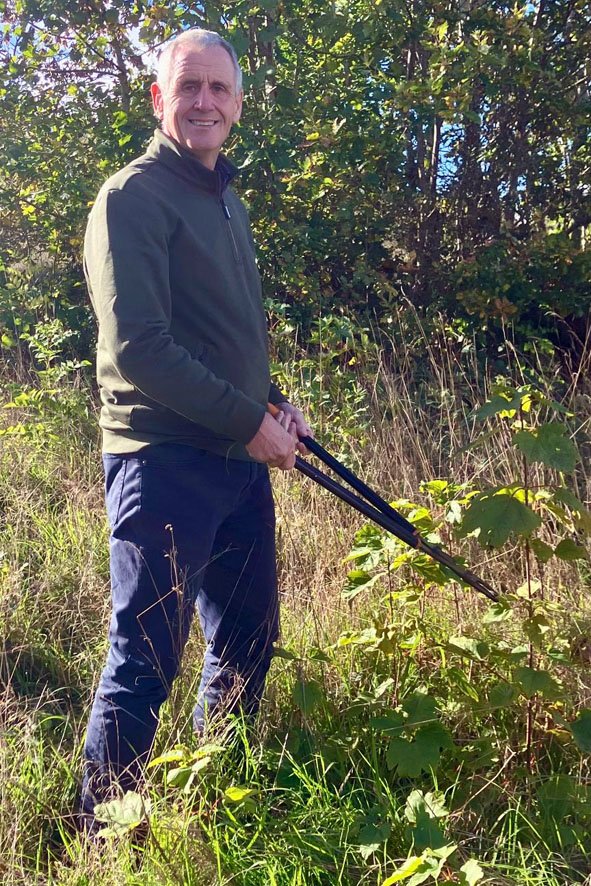 Snipping back saplings in the Wyre Forest
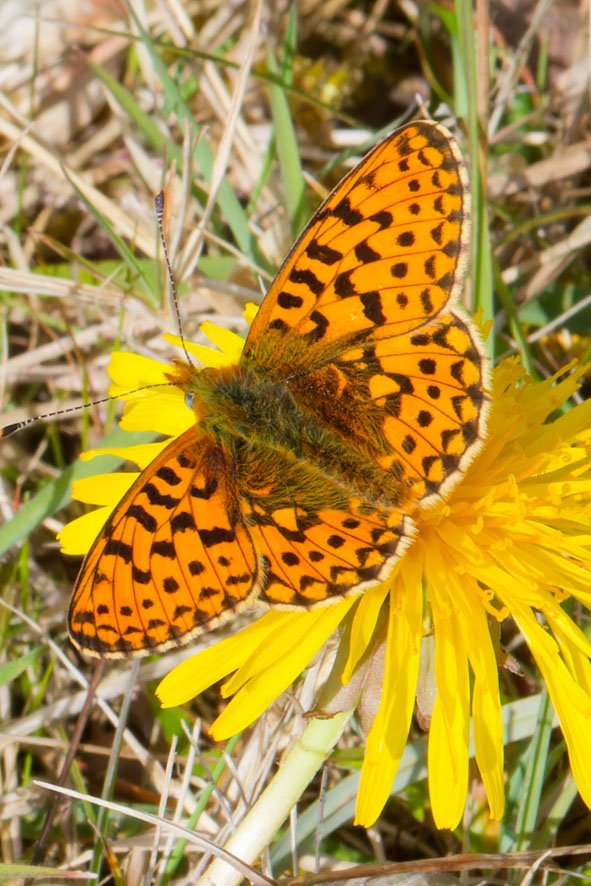 Pearl-bordered Fritillary
As it happens, I worried needlessly. The group members were very friendly and welcoming. At the start of the session, we were briefed on its purpose, which involved widening and improving a forest ride. There were several roles to suit a range physical abilities, underpinned by enthusiasm and a great team ethos. Being quite fit, I volunteered to clear some of the freshly cut saplings. I found that day immensely rewarding for several reasons: working in a beautiful environment, helping to sustain the nature it holds, and meeting and working with like-minded people.
I've since been involved in monthly work parties throughout the autumn and winter with WM-BAMS in the Wyre Forest and at Penny Hill, carrying out tasks to enhance woodlands glades, clear invasive scrub and generally improve habitats for butterfly species.
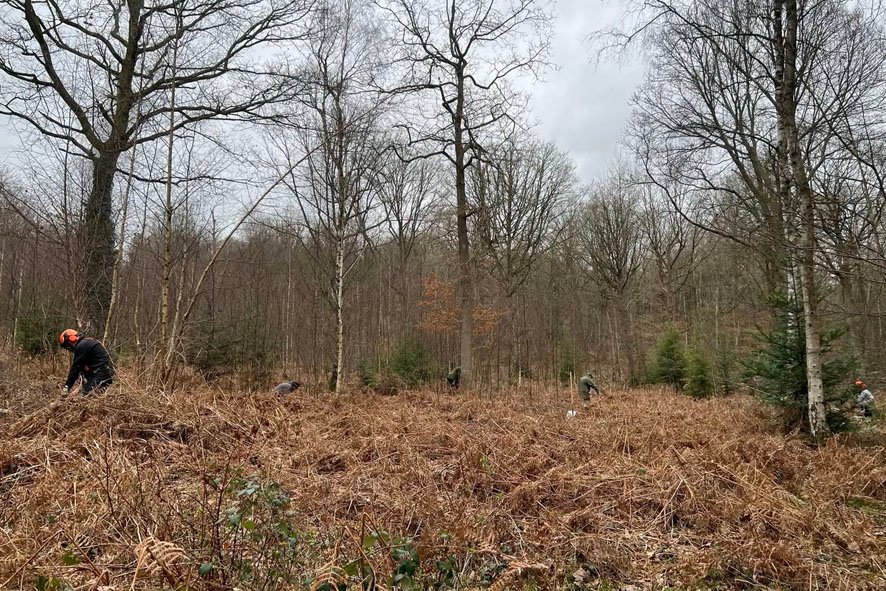 Volunteers clearing scrub to create suitable habitats for butterflies
Having been involved in practical work to improve habitats, I was keen to see the tangible impact it had on the butterfly population of the forest and volunteered to carry out weekly transect walks (between 1 April and 29 September) on Edwards Way and Dowles Brook West. The transect surveys provide valuable information to help establish site trends against previous years. For example, over the past two years, good numbers of Pearl-bordered Fritillary have been recorded, particularly in areas where conservation work had been done in the preceding autumns and winters, supporting the strategy adopted by WM-BAMS and Forestry England.
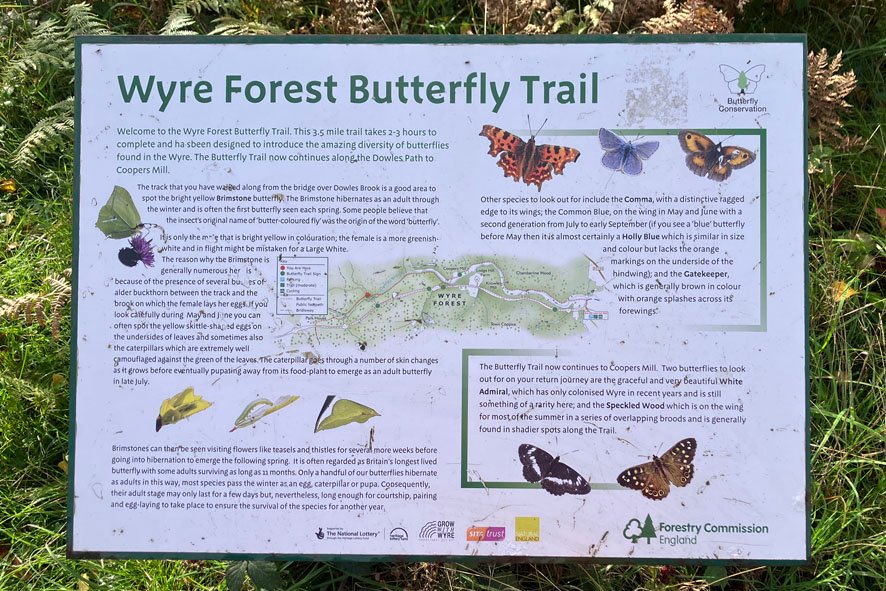 Information board showing butterflies to be found in the Wyre Forest
As a relatively new volunteer for WM-BAMS, starting with a rather limited knowledge of butterflies, I find the work immensely interesting and satisfying. While it’s very rewarding ‘giving back’ to the Wyre Forest, on a personal level I have benefited in several ways:
- My knowledge of butterflies is significantly deeper, thanks to other volunteers sharing their knowledge and then my undertaking transect walks, where I have the opportunity to observe subtle weekly environmental changes that influence the emergences and life cycles of butterflies.
- Working outdoors in fresh air provides free physical exercise and other wellbeing benefits, with some volunteers referring to it as their green gym! While the work is of a physical nature, the broad range of roles suit people with differing physical abilities.
- The Wyre Forest and Penny Hill work parties have provided friendly and engaging company, teamwork, and the chance to meet people who share similar interests over shared tasks and tea breaks.
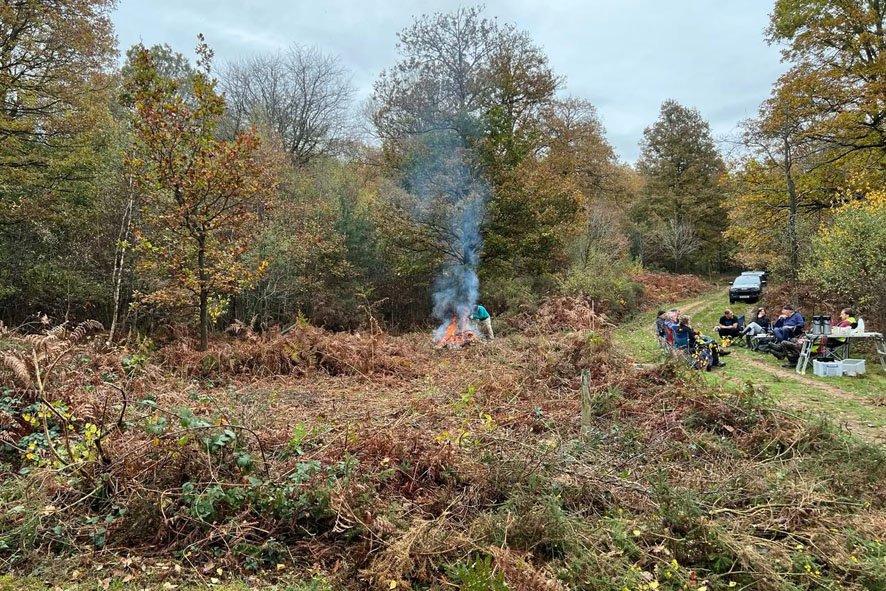 Enjoying a break while the bonfire burns on