Related Articles
South American Rainforest
29th March 2026
Romancing Romanian Butterflies
28th August 2026
Revealing Romanian Moths
28th August 2026
Charaxes and Gorillas in the Mist
John Maddocks shares highlights of a group trip in May 2026 to the parks and reserves of Uganda, with its diverse butterfly species and other wildlife.
The Zika Forest
When Mike Williams announced his latest holiday tour would start in the Zika Forest, a place so lovely it had a brand-new deadly virus named after it, I thought it might be evidence that he’d finally cracked after spending a few too many days out in the tropical sun. Fortunately, my initial doubts proved unfounded and it was a perfect place to be introduced to the butterflies of Uganda.
The forest is home to a mosquito research station, which was where the virus was first identified and named. Being so close to Entebbe airport, it was the ideal place to start our three-centre tour of Uganda. The nine of us who went with Mike were privileged to have the expert knowledge of African butterfly guru Safi with us again, along with local guide Rogers. Although we only had a few hours there, it was enough to see a good selection of the classic common African butterfly families such as Acraeas, Commodores and Pansies. Acraea egina (Elegant Acraea) and Stephenia pseudegina (Westwood’s Acraea) both posed nicely. Most striking of the Commodores present was Precis octavia (Gaudy Commodore), which is a beautiful pinkish orange on top. Both white and yellow forms of Junonia sophia (Little Commodore) were plentiful.
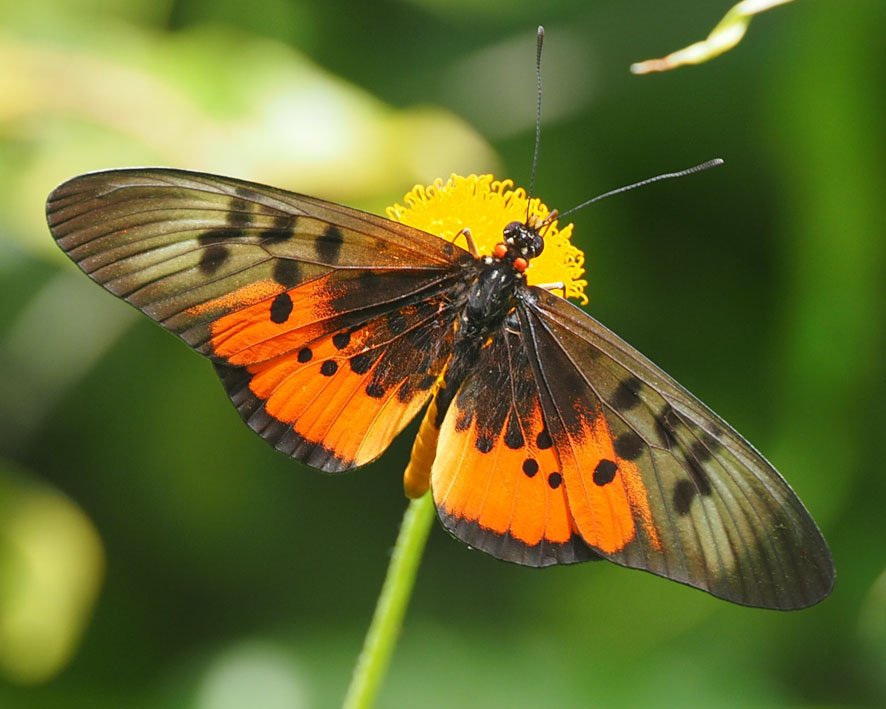 Acraea egina (Elegant Acraea)
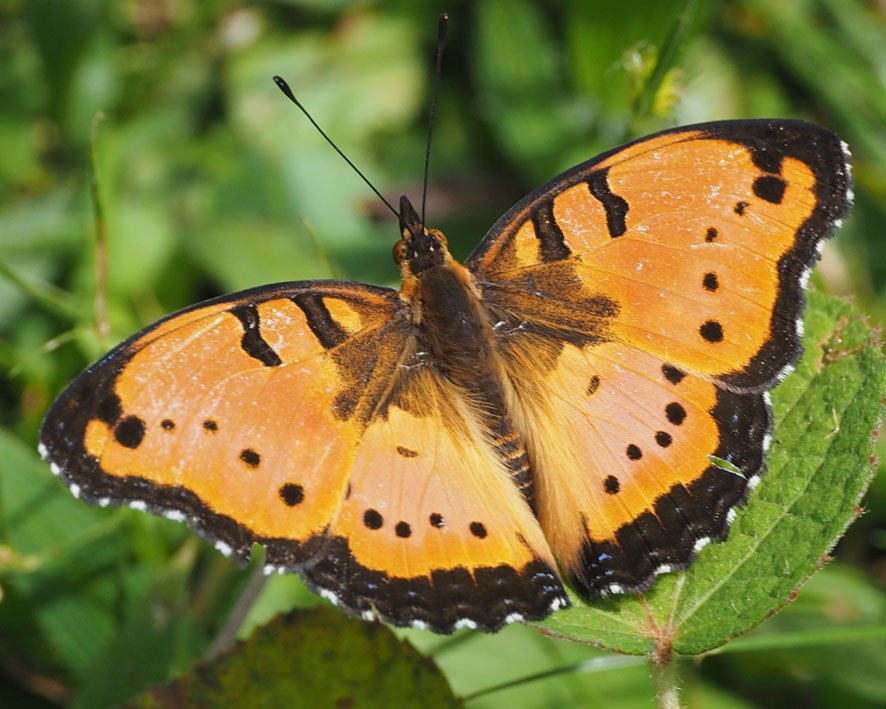 Precis octavia (Gaudy Commodore)
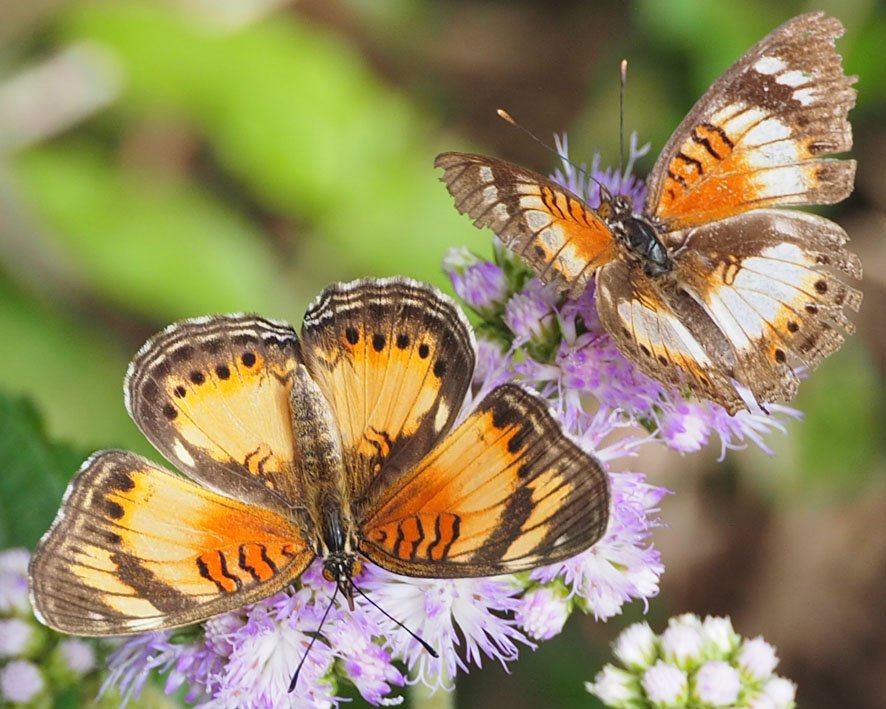 White and yellow forms of Junonia sophia (Little Commodore)
By midday, we reluctantly had to board the tour bus to begin the long journey to our first base at Hyena Hill Lodge just outside Lake Mburo National Park. We managed to break the journey with a stop at the equator for the obligatory group photo and some delicious local food.
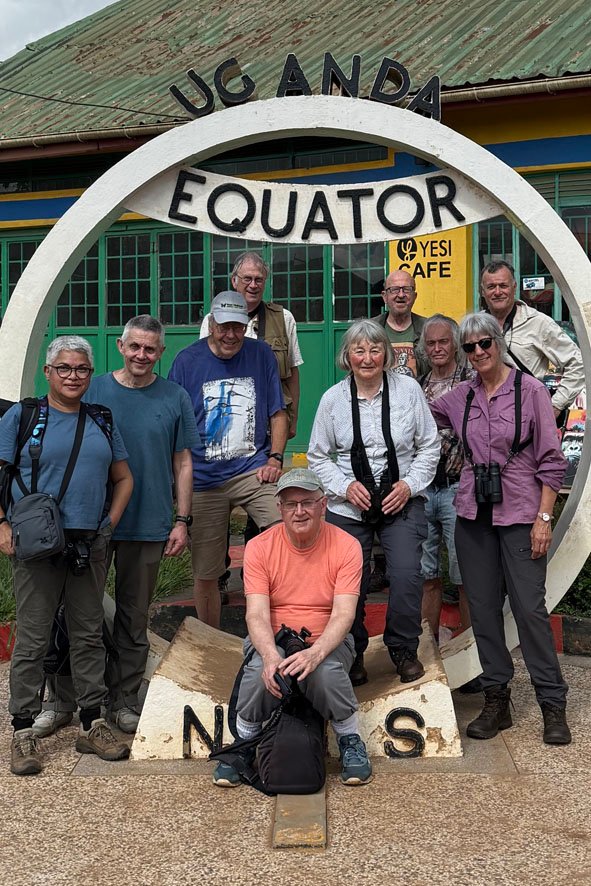
At the Equator (Muna Masood)
Hyena Hill Lodge
Hyena Hill made a lovely base, with a good range of savannah species such as Orange-tips to be found in the grounds of the lodge and easy access to the National Park. Vervet Monkeys roam around the lodge and offer a free early morning alarm call as they bounce about on your roof. The entrance ticket for the National Park is valid for 24 hours so we went for a game drive on the first afternoon and then went back the next day to visit Rubanga Forest, which is better for true woodland species and can be explored on foot if you have an armed ranger with you!
Butterflies were plentiful in Rubanga and it was difficult to decide on a focus for photography. I opted for the Charaxes, as several species were posing nicely on the ground, including C. jahlusa (Pearl-spotted Emperor), C. bipuntatus (Two-spot Blue Charaxes) and C. baumanni (Little Charaxes). Other personal highlights were the deep orange and black Lycaenid Pentila pauli (Paul’s Buff) and the pretty Pierids Belenois thysa (False Dotted Border) and B. creona (African Caper White).
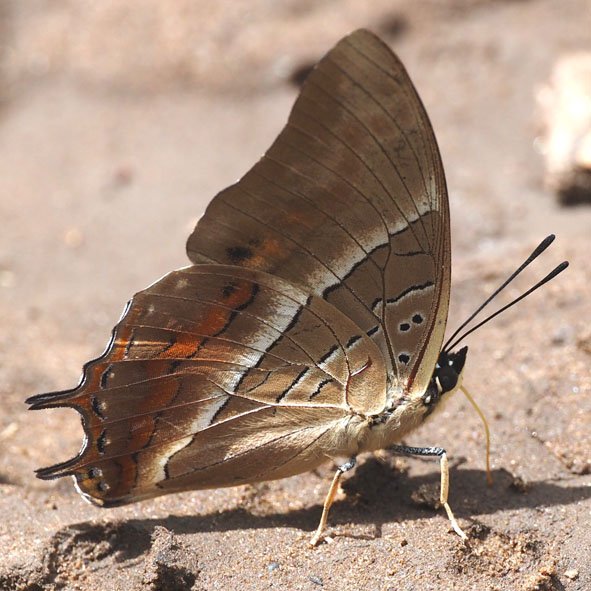
Charaxes baumanni (Little Charaxes)
Ihimbo Central Forest Reserve
Another long drive awaited us the next day but a study of Google satellite images suggested to Safi and Rogers a new site to visit at Ihimbo Central Forest Reserve. It was an inspired choice, with plenty of butterflies to be seen along the forest road. Nymphs were particularly common, especially Sevenia boisduvali (Boisduval’s Tree Nymph) and S. umbrina (Ochreous Tree Nymph). I concentrated on photographing four large Nymphalids, which all had distinctly different underside wing patterns, but, when I showed them to Safi, he pointed out that they were just different forms of the beautiful Salamis cacta (Lilac Beauty).
While we were preoccupied chasing butterflies, Rogers alerted us to a fabulous green viper that was crossing the road. Safi bravely scooped it up into his butterfly net and put it back in the middle of the road to give us all a chance to record it, while the locals kept well away! A call home from Mike later revealed it to be a deadly Four Lakes Bush Viper.
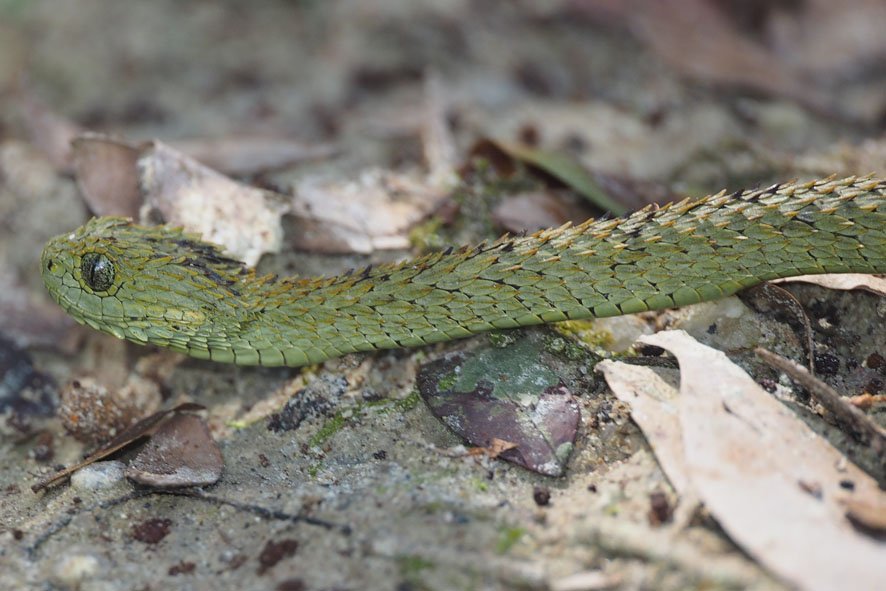 Four Lakes Bush Viper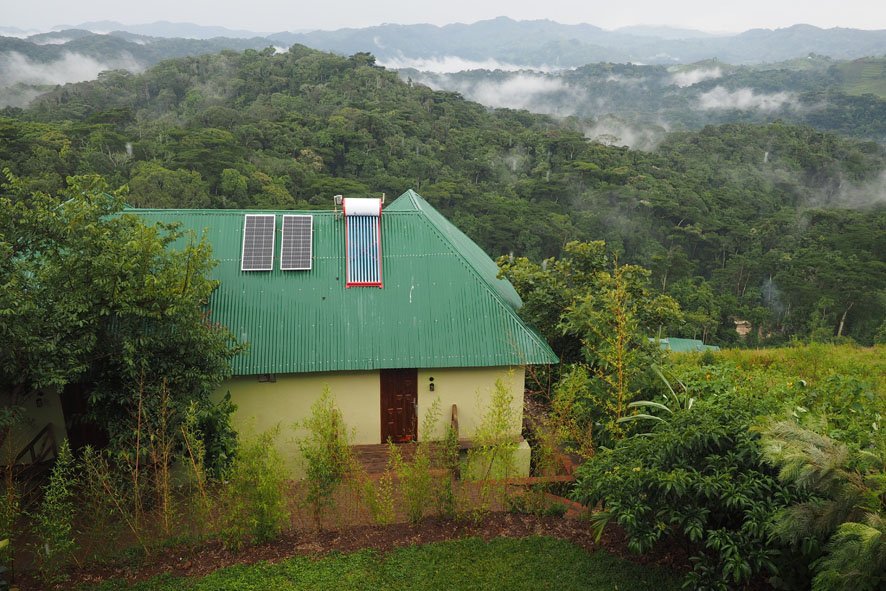
Bwindi Neckview Lodge
Our base for exploring the Bwindi Impenetrable Forest was the splendidly located Bwindi Neckview Lodge, with views overlooking the misty forest below. The last few hundred metres up to the lodge were too steep for our bus but the lodge owner cheerfully ferried our suitcases and anyone who was too wrecked to walk up to the lodge in several trips. The next day proved to be the most memorable of the trip for many of us but for different reasons.
Most of the group took up the option of a trek into the forest to spend the morning with Mountain Gorillas. It was an expensive excursion with an early start and involved a walk of several hours but all who did it found it worthwhile.
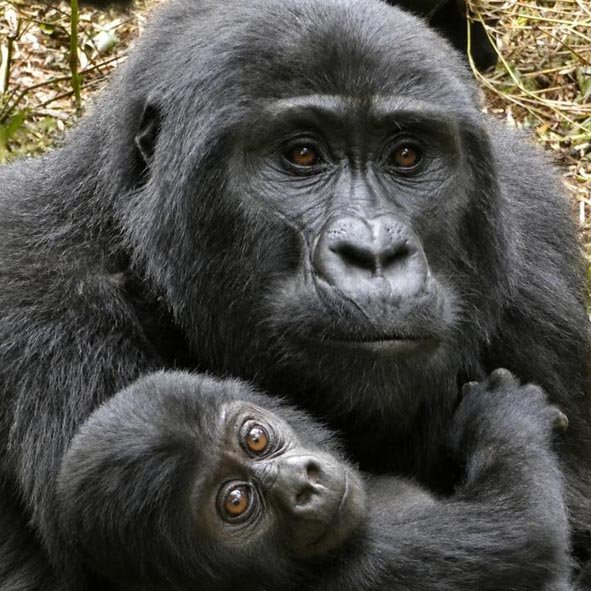
Mountain Gorillas (Muna Masood)
The remainder of the group were dropped off at a bridge over a river known to be a site for Papilio antimachus (Giant African Swallowtail), as well as plenty of other interesting butterflies. The weather was cloudy and cool when we arrived, making butterflying hard work, although a group of mud-puddling Anthenes and Uranothaumas was growing steadily in number. In a brief sunny spell, a stunning Protogoniomorpha temora (Eastern Blue Beauty) visited but swiftly disappeared along with the sun. Then the heavens opened for an apocalyptic thunderstorm that lasted over an hour. We did our best to shelter in the bushes and a couple of local birdwatchers tried to keep us dry with some tarpaulins. It didn’t work: every square-millimetre of our clothes and boots was soaked by the time the storm eased off. We started the long walk back to the lodge but then cadged a lift from some friendly locals in the back of their lorry. I don’t imagine the UK police would have been too impressed by the lack of seatbelts in the back but then they wouldn’t have been impressed by the lack of seats either! We, however, were profoundly grateful for the assistance.
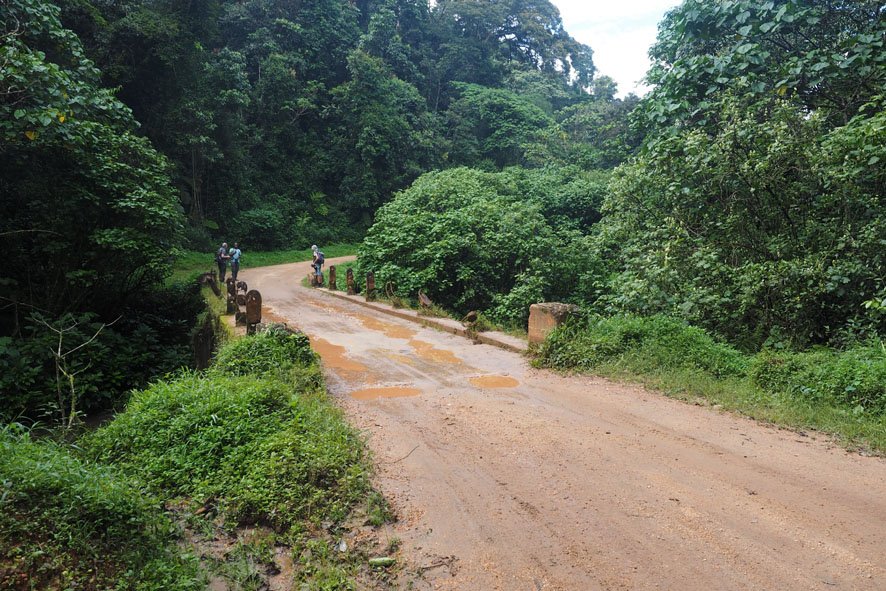 Neck of Bwindi Bridge
The pattern of Bwindi weather became clear over the next two days: mixed sun and cloud in the mornings giving way to heavy rains around lunchtime, curtailing further butterflying. We visited Cuckooland Lodge, best known for its varied Sunbirds, and managed to photograph a handsome Precis rauana (Montane Commodore) before rain forced a disorderly retreat to the bar and restaurant, where we sheltered for several hours before starting the long walk back to the bus.
A visit to higher altitudes not surprisingly brought us to a quite different group of species from those we’d observed at lower altitudes before rain stopped play. Safi found us a pretty mud-puddling Anthene hobleyi (Hobley's Hairtail) and a nectaring Mylothris jacksoni (Jackson’s Dotted Border). Another interesting species was Neptis ochracea (Yellow Mountain Sailer), which is easy to identify by the yellow patches that replace the white patches of most other Sailers. On returning to the bus when the afternoon rain started, we found it guarded by a lovely pinkish-tinged Precis sinuata (Wide-banded Commodore), which posed happily for photographs in the descending gloom.
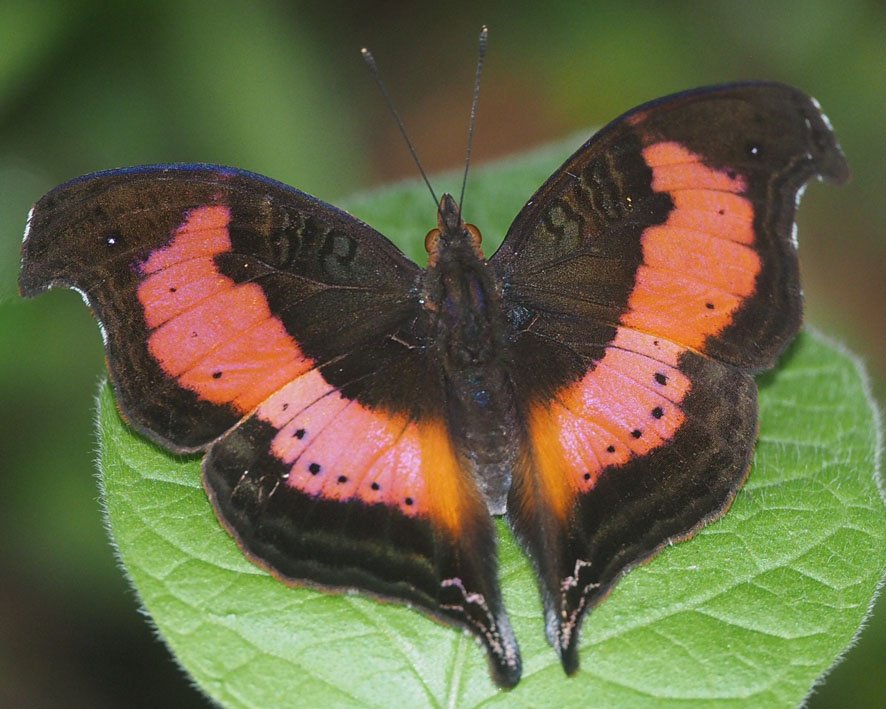 Precis rauana (Montane Commodore)
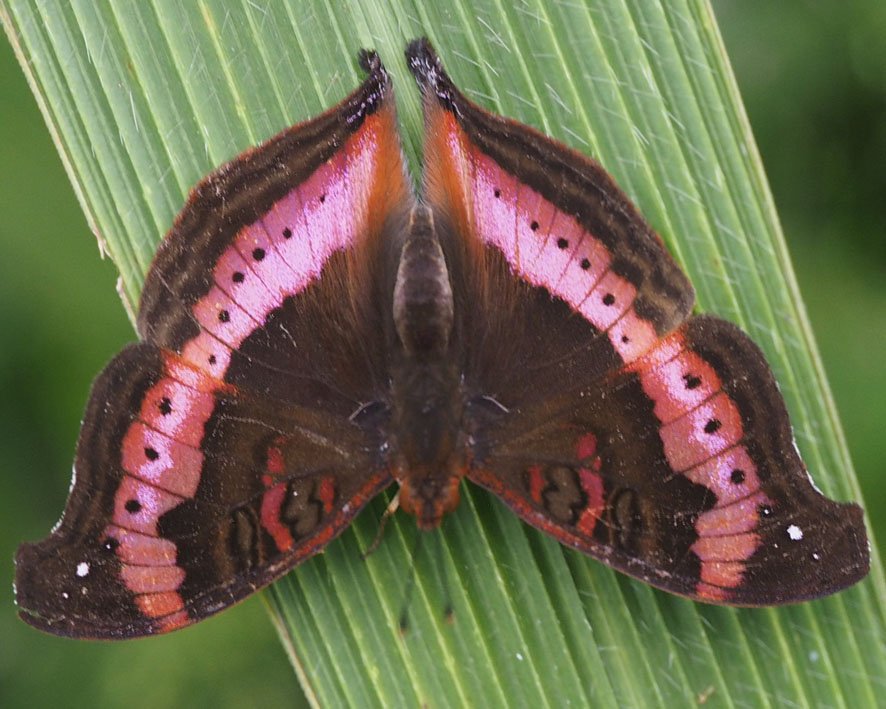 Precis sinuata (Wide-banded Commodore)
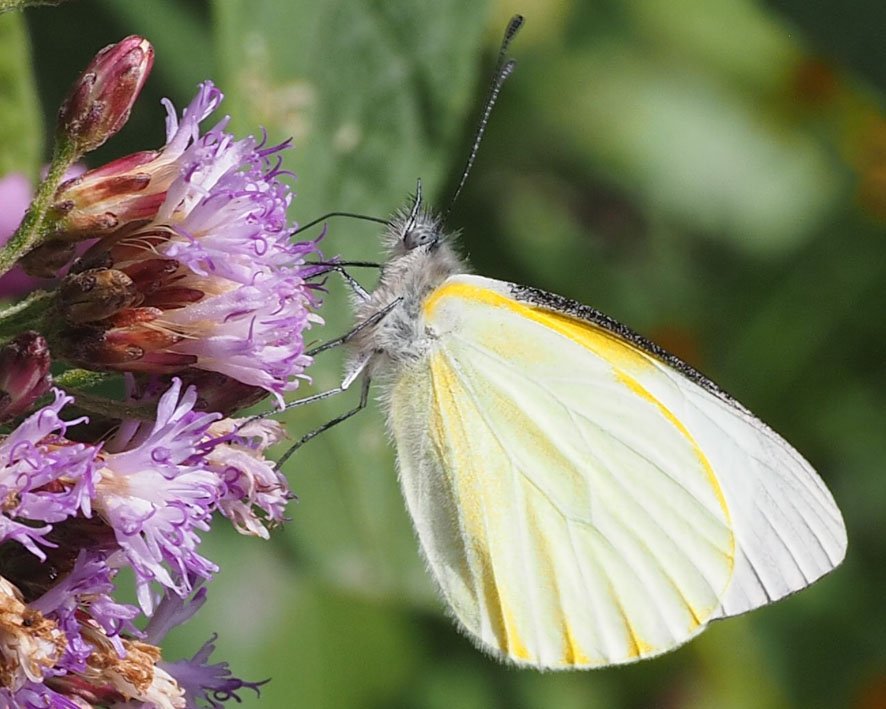 Mylothris jacksoni (Jackson’s Dotted Border)
Nkima Forest Lodge
The eternally long drive to Nkima Forest Lodge near Entebbe the next day led to a sighting of what I initially believed to be some sort of flying dinosaur in a marshy area right next to the main highway. Everybody else, however, recognised it as a Shoebill Stork and we were all delighted to see it.
It was great to spend the following day out of the bus, just wandering round the Lodge's extensive grounds. The owners, keen butterflyers themselves, had even produced their own butterfly book for the site. The elegant Protogoniomorpha parhassus (Forest Mother of Pearl) was common there and, at one point, we had four of them spiralling slowly round us, showing off their gorgeous pearlescent sheen. Also common was Euphaedra medon (Common Green Forester), which was surprisingly the first Forester I’d seen on the trip. One was permanently perched outside my lodge. Muna and Paul trumped that with a pair of Crowned Hornbills courting outside theirs. Near the restaurant is a bush famed for the rare large Lycaenid, Teratoneura isabellae congoensis (Eastern Isabella): this species has a fascinating life-cycle involving ants and aphids, which I won’t ramble on about here! A night walk was made memorable by sighting a Green Bush Viper winding slowly through the low branches.
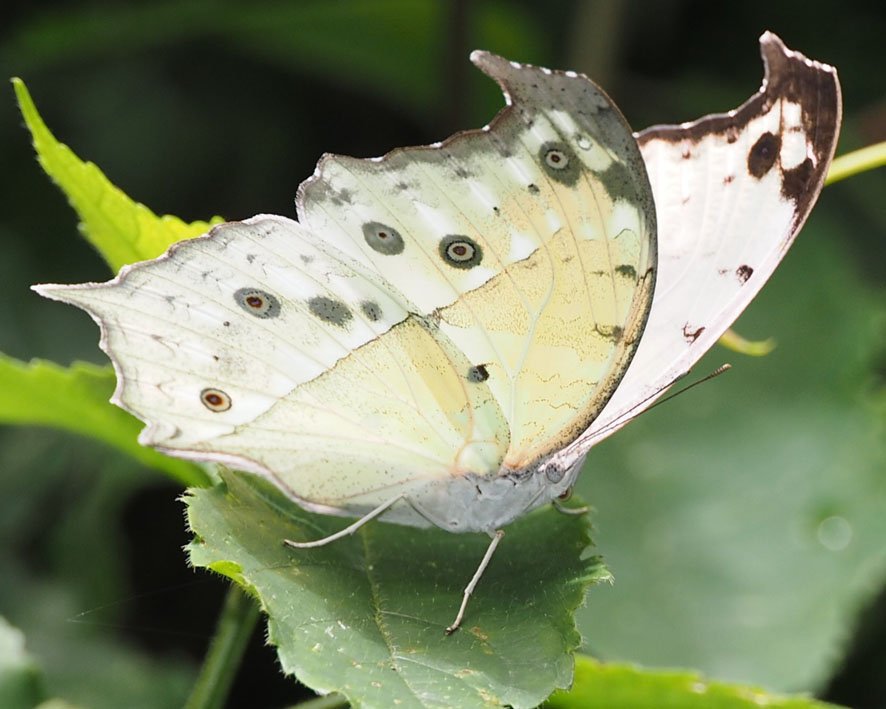 Protogoniomorpha parhassus (Forest Mother of Pearl)
 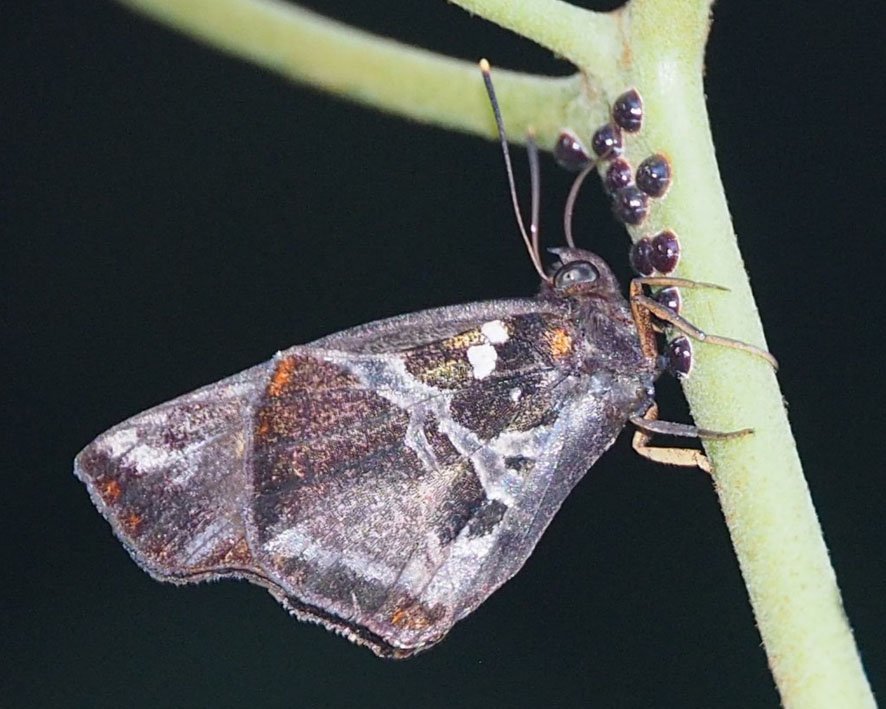 Teratoneura isabellae congoensis (Eastern Isabella)
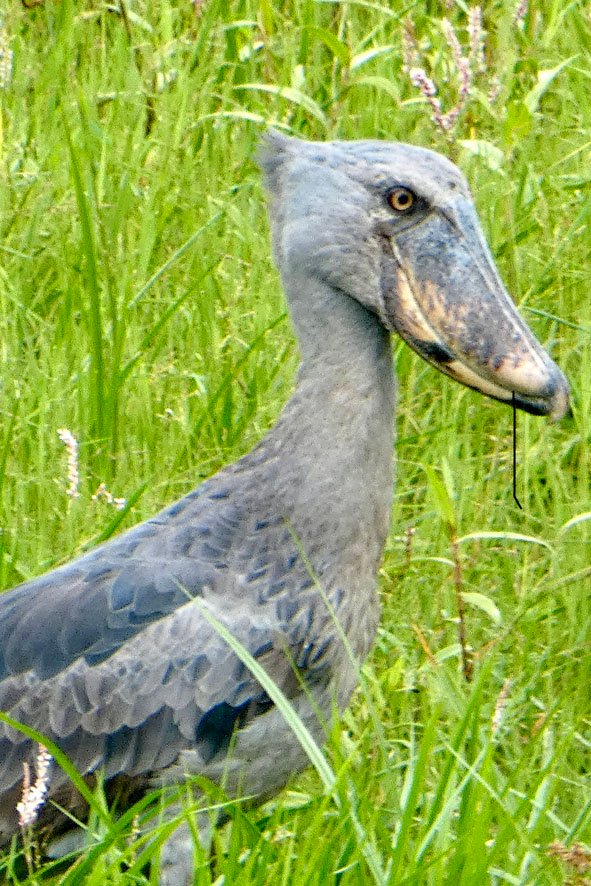 Shoebill Stork (Muna Masood)
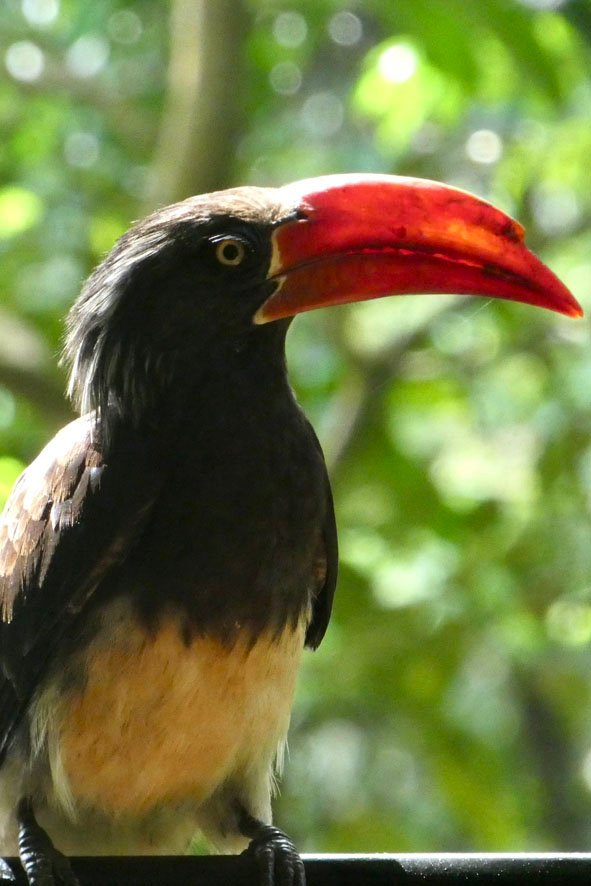 Crowned Hornbill (Muna Masood)
On the last morning, some of the group went to the local Mabamba wetlands to pursue Shoebill Storks, while others stayed at the lodge for a last chance to chase butterflies and watch the Vervet and Red-tailed Monkeys around the restaurant. Just before we left, one of the lodge staff brought back several unwanted baby Rock Pythons that had hatched in a nearby village a week or so before. They were released near the restaurant in the hope that they'd thrive in the surrounding forest.
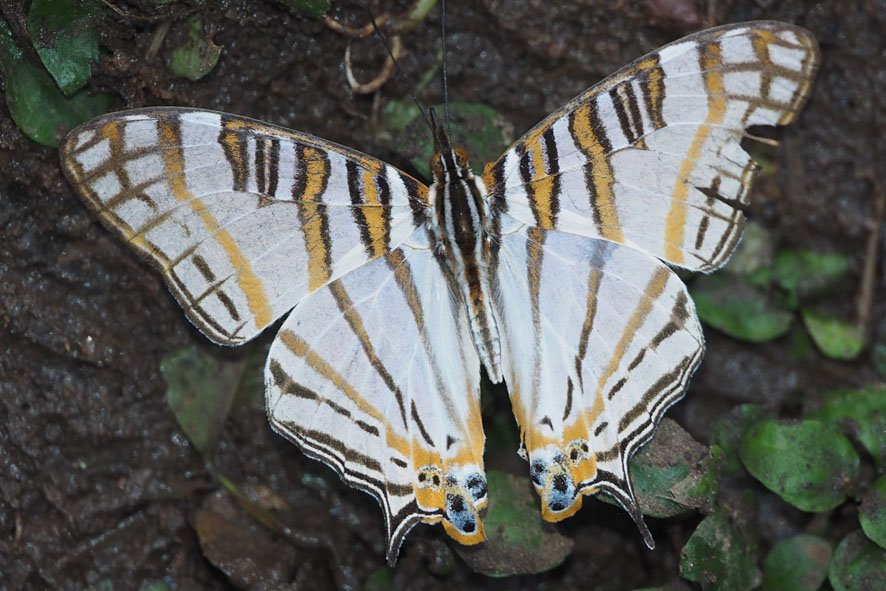 Cyrestis camillus (African Map)
It was another highly enjoyable trip with great company, as Mike always manages to organise with Safi, so many thanks to them. We look forward eagerly to the next adventure, wherever it may be.