Related Articles
Gardening for Butterflies and Moths
David Shearan explains how our gardens can work harder for butterflies and moths. Following a conversation with his sister, who leads a gardening group for adults with learning difficulties and wanted advice on how to garden for pollinators, he decided to start with general advice and provide references for more detailed lists of plants and other resources.
.jpg) This is my own garden, although strictly speaking my wife Lesley is the gardener and the one who does most of the work. In this flower bed, there is Knapweed, Mallow, Cornflower, Sunflower, Mint, Catmint, Foxglove, Evening Primrose, Teasel and Oxeye Daisy.
This is my own garden, although strictly speaking my wife Lesley is the gardener and the one who does most of the work. In this flower bed, there is Knapweed, Mallow, Cornflower, Sunflower, Mint, Catmint, Foxglove, Evening Primrose, Teasel and Oxeye Daisy.
General Advice and Tips
- Choose a variety of nectar-rich plants that produce flowers throughout the seasons. This will help our long-living species, as well as those that emerge at different times of the year.
- Visit garden centres on sunny days and buy plants that are attracting butterflies and other pollinators.
- Choose single-flowered rather than modern hybridised double-flowered plants. The pollen and nectar in double flowers are less accessible to pollinating insects.
- Include native wildflowers in your garden, on a small or large scale depending on its size. You can put them among cultivated plants, in window boxes or pots, as a border in front of your flower beds, or even as a separate bed or meadow. It's important, though, that the flowers are in full sun.
- Avoid the use of peat, weedkillers and insecticides.
However, if we only cater for adult butterflies in our gardens, we miss out two important and fascinating aspects of lepidoptera life: 1) our amazing moths and 2) other lifecycle stages (egg, larva, pupa) of both butterflies and moths. You can do things in your garden that will help with both of these, and the purpose of this article is to help you get started. Be prepared for a lifetime of learning as you discover more about these amazing insects.
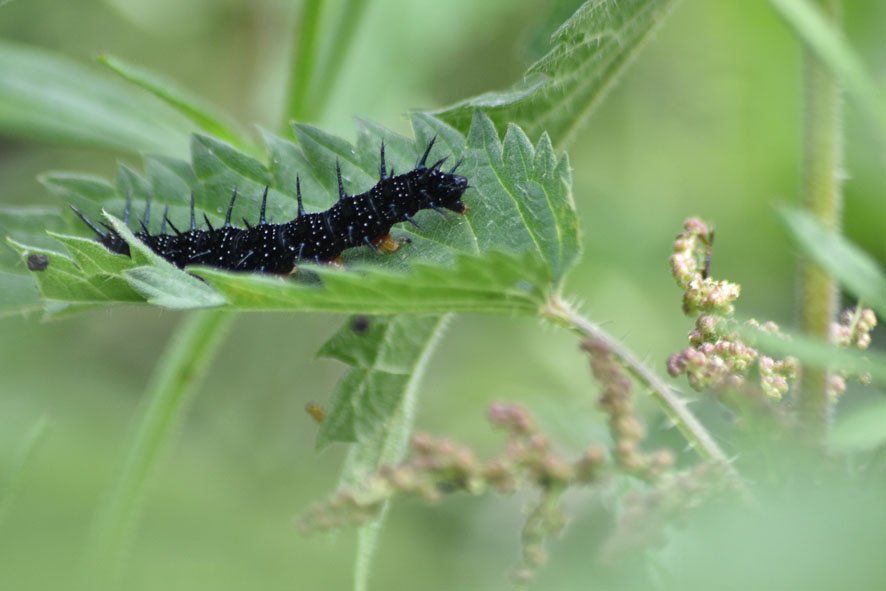 Caterpillar of the Peacock butterfly
An introduction to moths
To those new to the world of moths, there are a few things to say first:
- There are 2,500 species of moth in the UK and (myth buster) only two of those come into our houses, where their larvae will eat clothes and carpets made from natural fibres.
- If you see a moth in the house that isn't dull brown/tan and featureless, it won't eat your stuff! Just catch it carefully and put it outside in your garden at night.
- You can't attract all 2,500 species of moth to your garden but keen moth-ers frequently record several hundred different species in their gardens each year. By contrast there are only around 60 species of butterflies in the UK and you might only see 15-20 species in a UK garden. Clearly there will be fewer in a tiny garden compared to a large one.
- Moths are efficient pollinators and an essential part of the food chain for birds, bats and other wildlife.
- Be prepared to see some stunning moths with amazing colours and incredible camouflage, in a huge variety of sizes and shapes. Just to whet your appetite, here are photos of a Humming-bird Hawk-moth feeding on Red Valerian and a White Plume Moth.
.jpg) Humming-bird Hawk-moth (Roger Littleover)
Humming-bird Hawk-moth (Roger Littleover)
How to help moths
Even before you try to help them, moths will be visiting your garden. You'll see some during the day, because around 130 of our larger moths are classed as day-flying, but the vast majority are nocturnal. You can cater for day-flying moths quite easily because they visit flowers as butterflies do. To cater for night-flying moths, choose plants that release their scent at night: these are often pale or white. Some great choices are Evening Primrose, Nicotiana, Jasmine, Sweet Rocket and Honeysuckle. An added benefit is that they are all attractive to us and to butterflies and moths in the day-time.
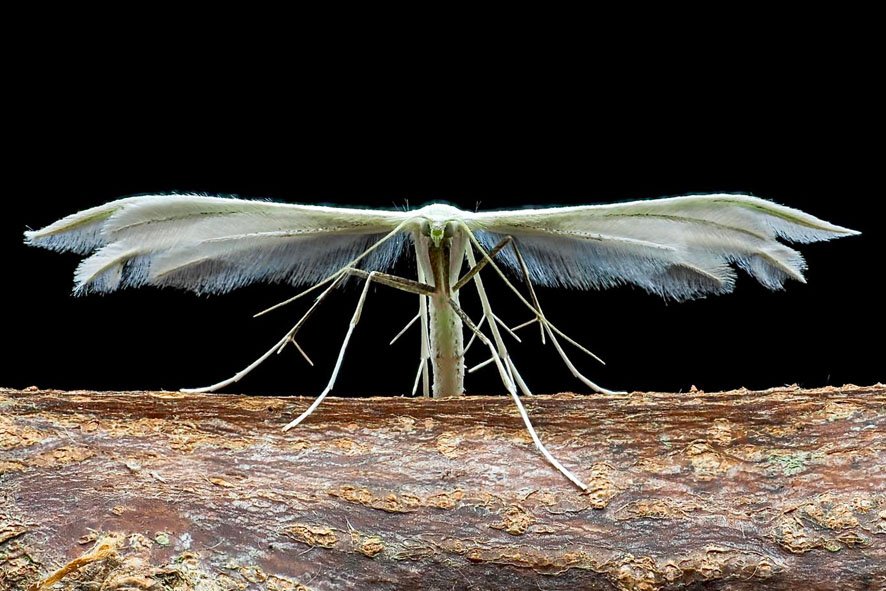 White Plume Moth (Julian John)
Other lifecycle stages
All our butterflies and moths undergo complete metamorphosis. This means that they pass through four distinct life stages: egg, larva (caterpillar), pupa, and adult. It's entirely possible to make your garden friendly to different species at different stages of their life if you understand their requirements. Some things you do will help many species but one of the endlessly fascinating challenges you face is the very specific needs of some species.
Eggs and Caterpillars
You'll greatly increase the chances of seeing specific species if you plant their caterpillar foodplant. For example, to see Orange-tip in the garden, plant Garlic Mustard or Cuckoo Flower. To see Brimstone, plant Buckthorn.
Every vegetable gardener will know that they're guaranteed to see Cabbage White butterflies and caterpillars if they plant brassicas - many won't know that there's no such thing as a Cabbage White (in the same way as bird lovers will tell you there's no such thing as a seagull). There are actually three species of white butterflies that are likely to visit a UK garden (Large White, Small White and Green-veined White) and only the first two have caterpillars that devastate our cabbage crops. If you're more interested in butterflies than vegetables, why not plant cabbages (or other members of the Brassicaceae family) or nasturtiums?
Many of our moths are dependent on native trees and shrubs so include them if your garden is big enough. For example Hawthorn is one of the most vital native food plants in the UK, supporting over 300 insect species. Its leaves, buds, and flowers are primary food sources for the caterpillars of numerous moth species, which in turn provide essential food for breeding birds.
Pupae
If you read more about butterflies and moths, you'll discover that the fully grown caterpillar often leaves its food source and seeks out somewhere sheltered to pupate. Depending on the species, they might drop down into the undergrowth, burrow in the soil or leaf litter, or attach themselves to the stems of plants. The best way to protect them is to minimise physical disturbance by curbing our human desire for tidiness.
Here are some suggestions:
- Leave intact any dead perennial stems, fallen leaves and brush piles.
- Delay pruning until late spring.
- Delay raking and removing leaves until spring, or rake them into a corner of your garden rather than putting them in the bin.
- Allow patches of long grass, tall weeds and 'clutter' to remain.
- Build a log pile.
What else can I do?
- Join social media groups (see References), ask questions and look at what other people ask and the answers they get.
- If you really get hooked on moths, consider joining the Garden Moth Scheme.
- Learn to love the nettle - it's the primary foodplant for over 30 species of caterpillars (including the Peacock pictured here) and what better way to observe the lifecycle and to involve children. You really do need some space though because your nettle patch needs to be in full sun, not tucked away in some hidden space.
- Keep learning - one way to do this is to pick individual butterflies or moths and research their caterpillars' food plants (see References). This information can help you choose plants for your garden. You could then go a step further and do a reverse search - in other words, find out which other butterflies and moths use the plant(s) as nectar sources or caterpillar foodplants.
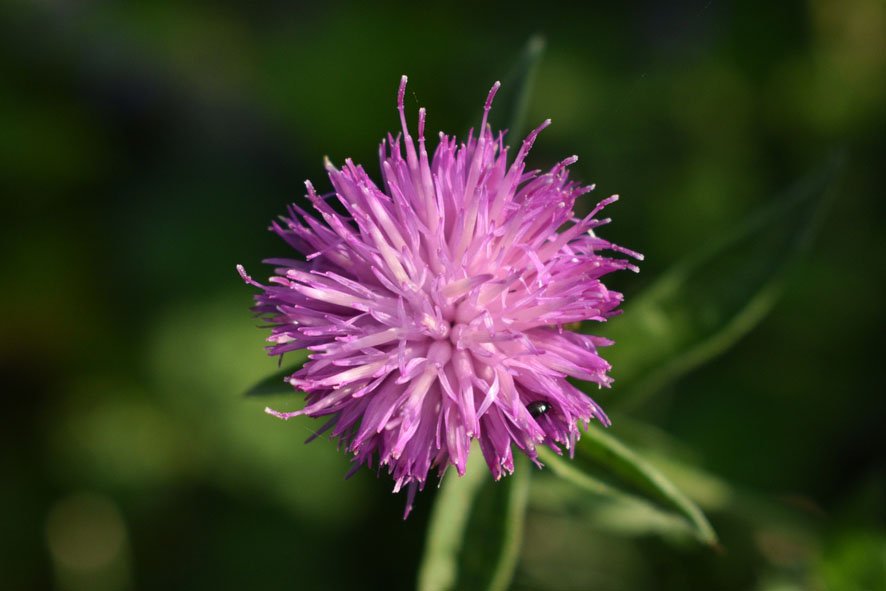 An example of the reverse search idea is a common wildflower, Knapweed. You may discover a Painted Lady butterfly nectaring on it one day: if you search for other butterflies that use Knapweed as a nectar source, you'll find Common Blue, Comma, Large White, Meadow Brown and Ringlet, among others. It's a fabulous wildflower and one you really ought to consider for your garden.
How will you know if you are successful?
You do want to know that you are doing the right thing and making a difference. Here are some ways in which you can do this:
- Make notes about the planting that you do and the results you see.
- Record the butterflies and moths, and lifecycle stages, that you observe. Notebooks are great for this (easy to look back at) but of course there are apps and one of the best is iRecord Butterflies (you need the full iRecord app for moths) - the advantage of this is that you'll be contributing to national monitoring.
- Hopefully, you'll start noticing day-flying moths, and sometimes you'll disturb night-flying moths when gardening, but, if you want to get more involved in the moth world, look into moth trapping. You can attend events where experienced moth-ers demonstrate trapping and show the results but, if you're really hooked, you need your own moth trap. Do take a look at this informative article by Mike Southall all about moth trapping for beginners.
Finally
In summary, you can attract butterflies and moths to your garden by growing foodplants for the larvae and nectar sources for the adults. As with other aspects of gardening, you might not be successful straight away - keep trying and keep learning. Above all, I hope you'll learn to love these insects and to take huge pleasure from doing what you can to protect them.
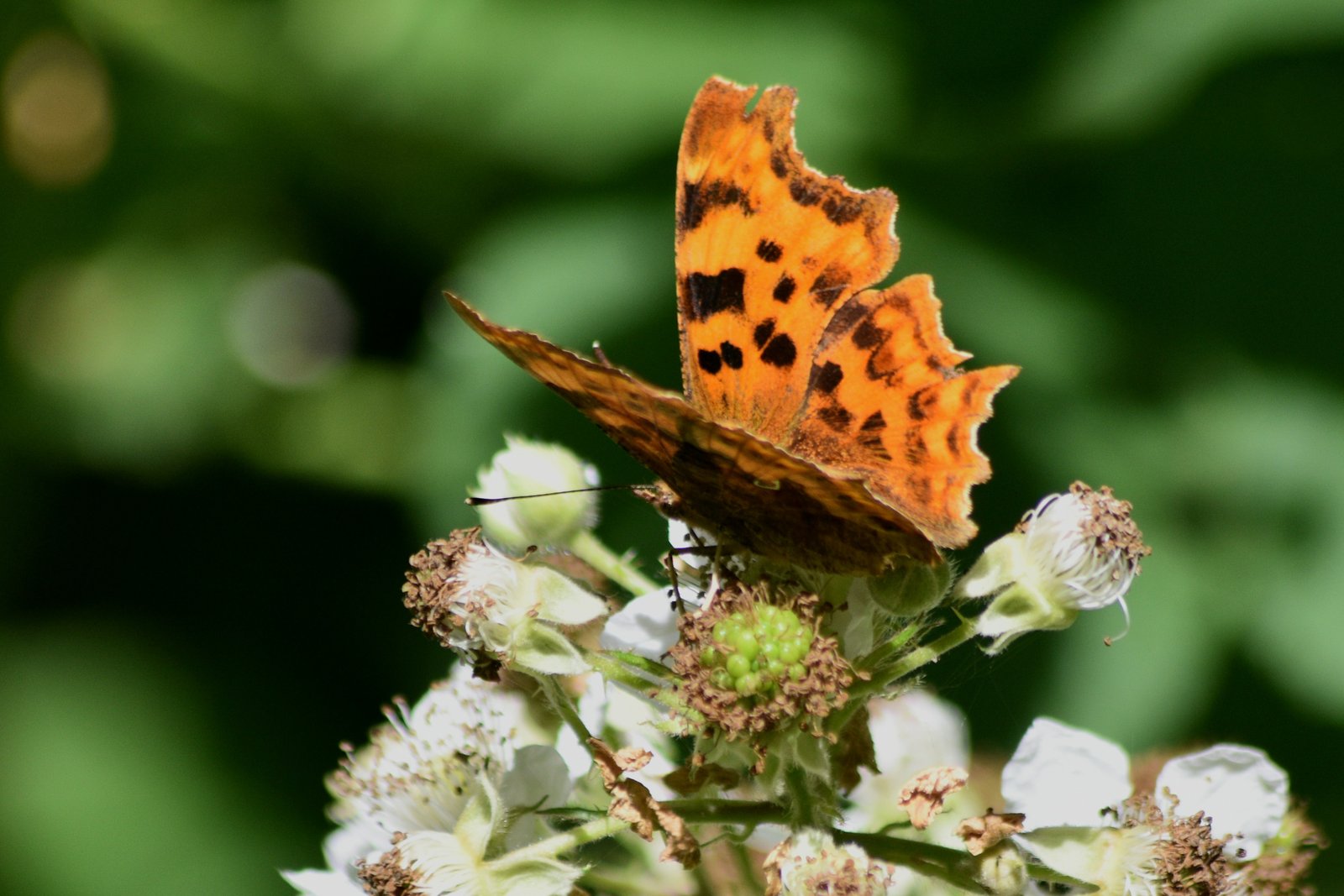 Comma on bramble
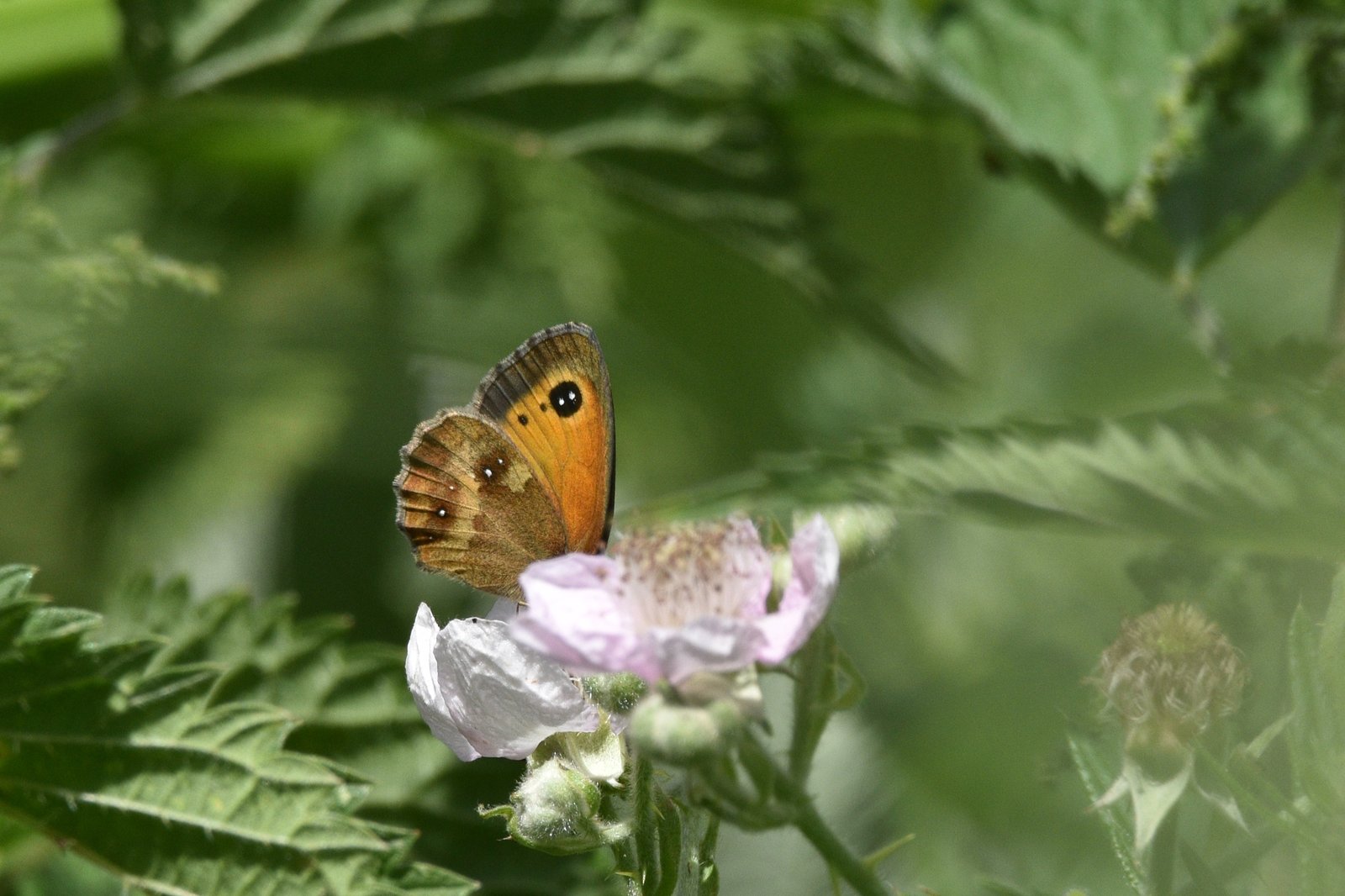 Gatekeeper on bramble
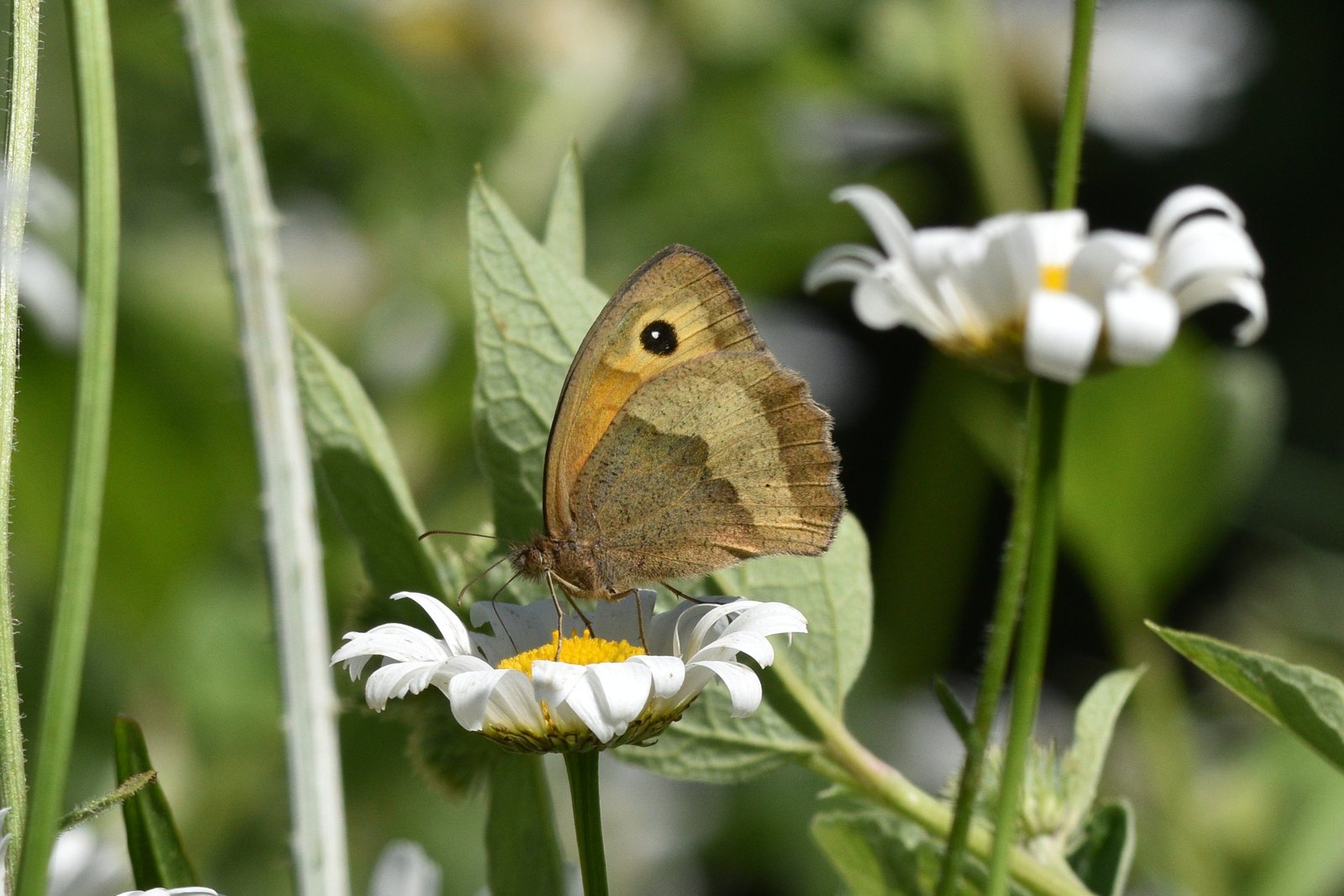 Meadow Brown nectaring on Ox-eye Daisy
References
- Wildlife Gardening Forum - a Facebook group that often has questions about butterflies and moths and about gardening to help them.
- Managing the garden for Nettle Feeding Butterflies - a useful and interesting post from the above forum.
- West Midlands butterflies and moths - a very active Facebook group for our region with many helpful members - a great place to ask for help with butterfly/moth identification.
- Butterfly Conservation - Gardening for Butterflies
- Butterfly Conservation - Moth Foodplants
- West Midlands Butterfly and Moth Society - use our website to find larval foodplants for the butterflies in our region - also, our shop gives details of books on the butterflies and moths of the West Midlands (sometimes available at events, saving the cost of postage).
- West Midlands Moths - use this website to find larval foodplants for the moths in our region.
- UK Butterflies - Peter Eeles' excellent website covering all UK butterflies, which you can use to find nectar sources and foodplants.