Clearwing Moths and Pheromone Lures
Using lures to record difficult-to-see moths
Mike Southall
January 2026
It may seem like an odd time of year to be thinking about summer day-flying Clearwing moths but now is a good time to prepare. The pheromone lures and traps that help spot these beautiful insects need to be ordered well before the summer season, while the lures are still available for purchase. The go-to place for ordering lures is Anglian Lepidopterist Supplies (ALS): their website includes details of the lures available, and the traps used to deploy them. It also has other information, including a list of other species attracted to various lures, some of which are seldom seen by other means.
ALS offers individual lures for specific Clearwing species and basic sets for the six or ten most commonly found ones. Some species have not yet been recorded in our region and those lures are only really useful if you are planning trips around the country or abroad. However, some species are increasing their range in the UK and could well reach our region soon. More information about our region's Clearwings is available in the Moths of the West Midlands book and the West Midlands online moth atlas.
I do most of my recording in my North Worcestershire garden, where I was surprised and delighted to find Red-tipped, Orange-tailed, Red-belted, Yellow-legged, Currant Clearwing, and Lunar Hornet Moth being recorded annually. My garden is in a rural setting but I note that a nearby Stourport resident has a larger garden Clearwing list than mine, with Six-belted Clearwing added to his list.
I record the species and date, photograph and iRecord it, let it go, and then put the lure back in the freezer for another year. This minimises disturbance of the species. Seeing more localised species, such as Large Red-belted, White-barred, Six-belted, Welsh Clearwing and Hornet Moth, requires a trip to their habitats. I can recommend joining an organised event to increase your chances of success.
Clearwings in my Garden
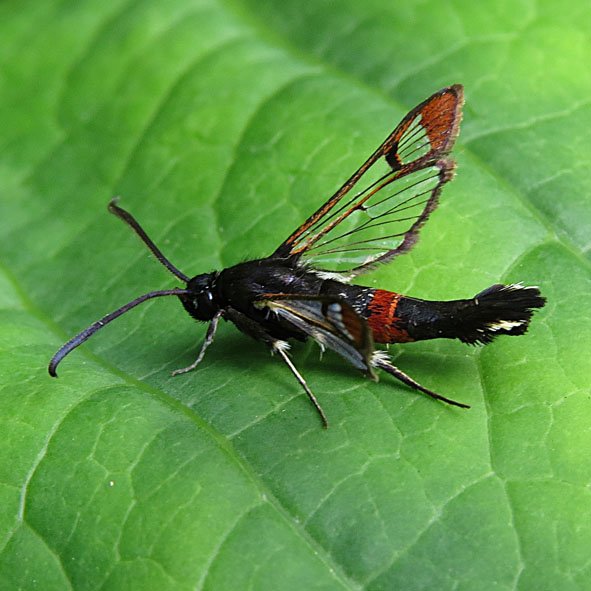 Red-tipped
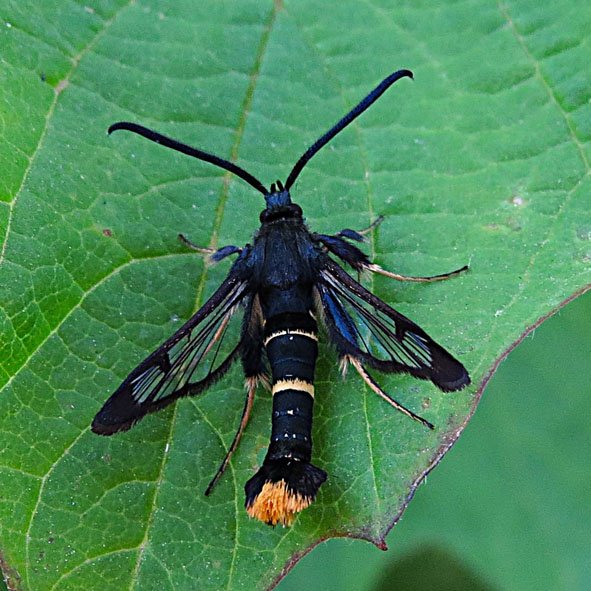 Orange-tailed
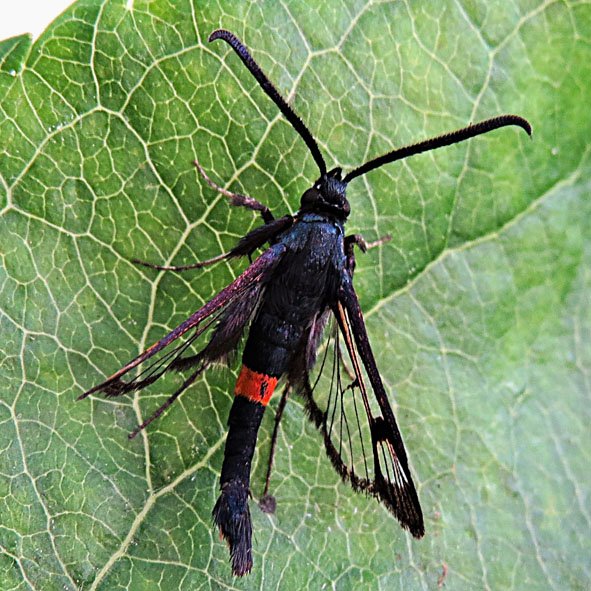 Red-belted
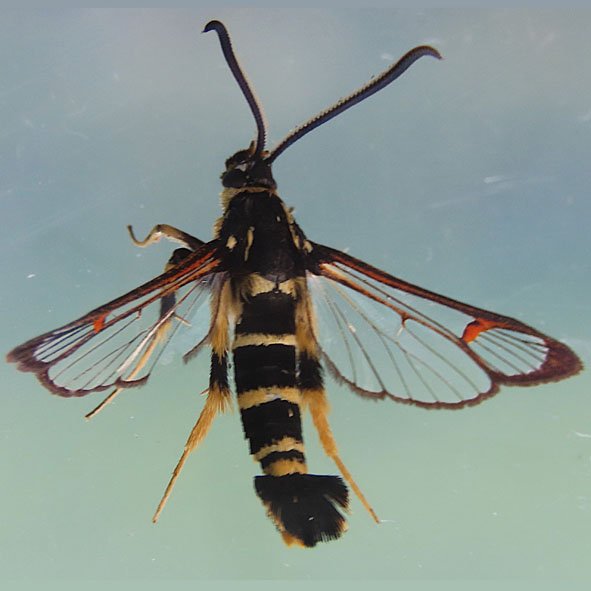 Yellow-legged
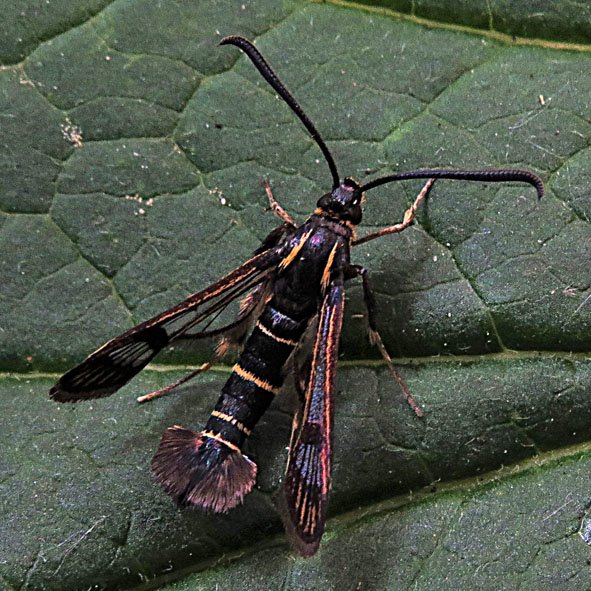 Currant Clearwing
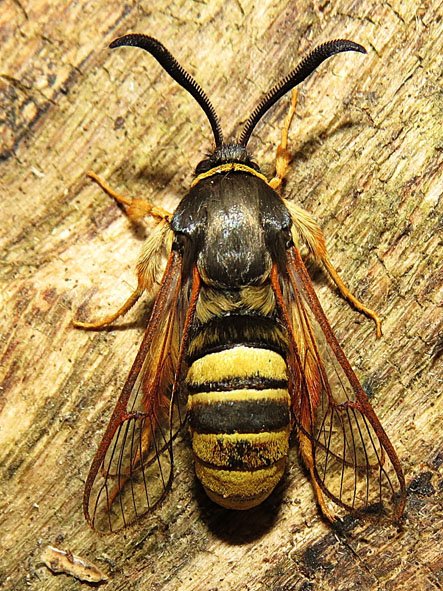 Lunar Hornet Moth
Other Clearwings in the West Midlands
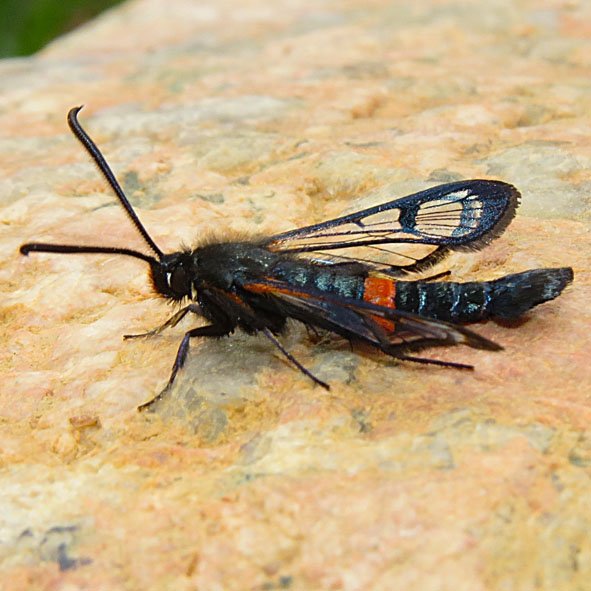 Large Red-belted
 White-barred
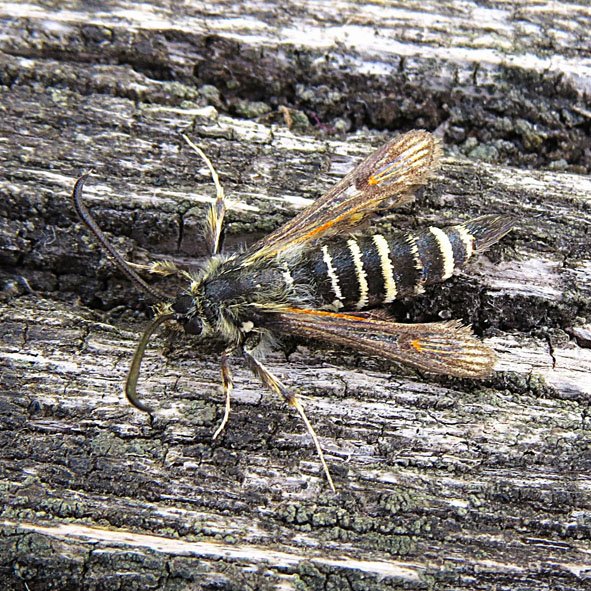 Six-belted
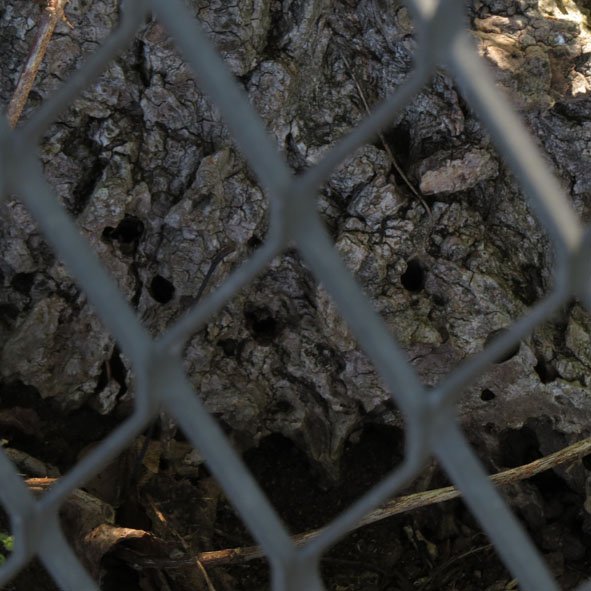 Exit holes for the as-yet-unseen Hornet Moth
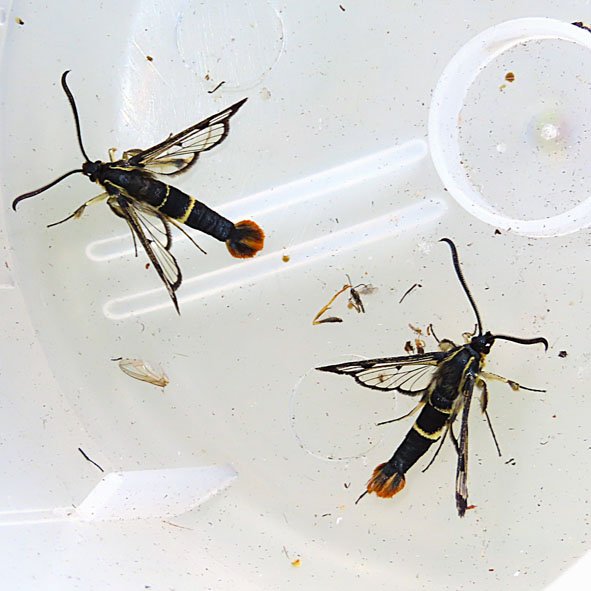 Welsh Clearwing
Other species
The stunning male Emperor moth although clearly not a Clearwing can be lured during its flight season of April and May. The lure, a small rubber bung, is best not put in a trap to avoid damaging this large moth.
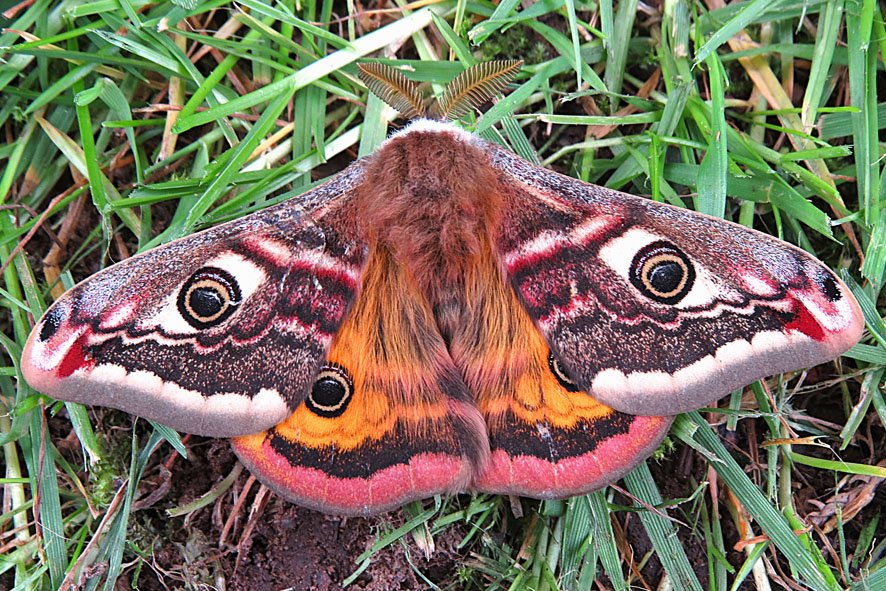 Male Emperor Moth
Also useful is the Ni moth lure; while it has not yet attracted the Ni moth here, it is good for the range-expanding Dewick’s Plusia and the Silver-Y moth. Pheromones are also used by pest control companies and these offer more recording possibilities: I take care to inspect our home wardrobe clothes-moth traps, which usually hold several species. One of these was identified as Triaxomasia caprimulgella, the Tree Hollow moth, a seldom-recorded Tineidae and a first for Worcestershire at the time.
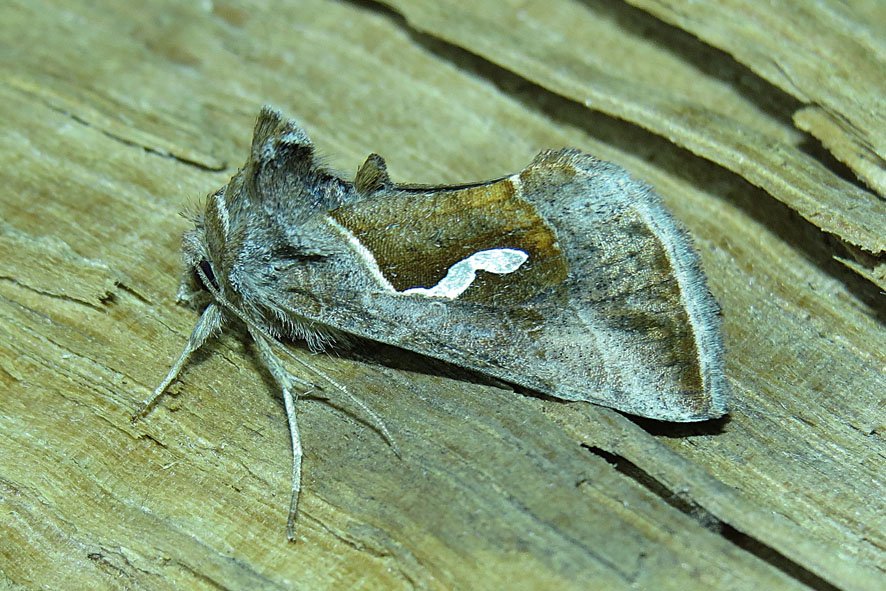 Dewick’s Plusia